Marriage is rarely a stagnant destination; rather, it is a profound and shifting journey—a dynamic, evolving process that matures as individuals accumulate life experiences, gain emotional depth, and refine their understanding of what it means to coexist with another soul. The transition from a first marriage to a second, or even a third, is not merely a repetition of a legal contract. Instead, it frequently reflects an internal metamorphosis. Individuals often emerge from the wreckage of past challenges with a newfound clarity regarding their own boundaries, needs, and the essential values that anchor a lifelong partnership. Each stage of this marital journey presents a unique set of opportunities for personal development, relationship growth, and a reimagined commitment to companionship that is grounded in reality rather than fantasy.
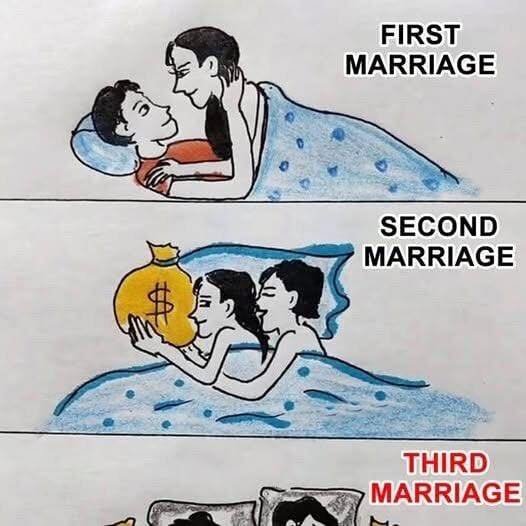
First marriages often launch with a staggering abundance of hope, excitement, and a shimmering sense of idealism. Most couples enter this initial union with the dream of creating a flawless life together—a domestic paradise filled with shared adventures and an unbreakable emotional connection. However, because many people in their first marriage are relatively inexperienced in the brutal complexities of long-term partnership, they often fail to appreciate the shadow side of commitment. The early years act as a crucible, revealing the harsh realities of balancing clashing personalities, mastering the art of effective communication, and managing the mundane weight of household responsibilities and financial stress. Without well-developed relationship skills or a reservoir of emotional resilience, these obstacles can quickly feel insurmountable. Consequently, many first-time spouses struggle to bridge the gap between their cinematic expectations and the gritty, day-to-day demands of married life, often leading to a slow descent into disillusionment or conflict.
By the time an individual approaches a second marriage, the lens through which they view love has usually shifted toward a more grounded and pragmatic perspective. Having survived the turbulent ups and downs of a previous legal union, people tend to enter a second marriage with a much sharper sense of identity. They know what they are willing to tolerate and, more importantly, what they are not. Second marriages are frequently characterized by a cautious, more deliberate approach to intimacy, where the focus pivots toward open communication and collaborative problem-solving. Yet, these unions introduce their own specific layers of complexity that a first marriage rarely faces. The blending of families, for instance, requires a Herculean level of sensitivity, patience, and cooperation. Navigating the needs of children from previous relationships while attempting to forge a new romantic foundation is a delicate balancing act. Financial matters also become a tangled web of prior obligations, shared assets, and legal ties to the past. Furthermore, the emotional scars from the first divorce can often resurface at inconvenient moments, requiring a deep commitment to healing and trust-building. Despite these hurdles, the hard-earned wisdom from the first marriage often allows these couples to establish healthier boundaries and foster a more stable, satisfying connection than they ever thought possible.
The third marriage represents perhaps the most significant shift in the psychology of partnership. At this stage, the societal pressures and traditional expectations that often haunt younger couples have largely evaporated. For those entering a third union, the priority is almost exclusively centered on emotional intimacy, shared values, and a profound mutual respect. The focus is no longer on building a massive empire or maintaining an image for the outside world; instead, it is about finding peace, authentic companionship, and a partnership that nurtures both individuals equally. People at this level of maturity have usually learned to shed unrealistic ideals, seeking instead a relationship based on radical acceptance and authenticity. There is a perceptible emotional gravity in a third marriage—a collaborative spirit that allows for better conflict resolution and deeper empathy. These individuals often place a high premium on personal autonomy, understanding that a truly healthy partnership involves a sophisticated balance between togetherness and individual freedom. It is a union of choice and clarity, offering a unique opportunity for fulfillment grounded in resilience and a genuine, unpretentious connection.
Regardless of the number on the marriage certificate, the foundational elements that dictate the success of a relationship remain remarkably consistent. Open and honest communication is the lifeblood of any partnership, serving as the essential tool for understanding a partner’s deepest aspirations and most hidden concerns. Patience and empathy are the buffers that allow a couple to navigate the inevitable disagreements and the inherent uncertainties of life. Perhaps most importantly, a shared commitment to mutual growth—not just as a unit, but as two distinct individuals—is vital for sustaining love over the long haul. Every stage of marriage brings its own set of unique challenges, but they all carry the potential for a deepening of intimacy if both partners are willing to treat their experiences as a classroom rather than a courtroom.
It is also vital to recognize that external factors play a massive role in shaping the nature of these unions. Cultural backgrounds, family dynamics, financial stability, and personal goals all act as the architecture of the relationship. For those in second or third marriages, the art of blending families requires a specific, sophisticated skill set. This includes fostering new traditions while respecting old loyalties and setting firm but fair boundaries with ex-spouses and extended kin. Success in these complex scenarios is rarely accidental; it is the result of active, intentional nurturing of the emotional bond through shared experiences and unwavering support during the difficult times.
In the final analysis, marriage is not a static or rigid institution, but an ongoing journey of discovery and renewal. With each successive union, individuals carry forward a treasury of lessons learned and emotional insights gained. The path from a first to a second and eventually to a third marriage is not a chronicle of failure or a repetition of mistakes. Rather, it is a story of evolution—a testament to the human spirit’s ability to heal, adapt, and build new foundations for love. By embracing the inevitability of change, prioritizing respect over ego, and fostering a culture of compassion, couples at any stage of their journey can cultivate a relationship that is not only lasting but deeply meaningful and transformative. Marriage, at its best, is the ultimate mirror, reflecting our growth back to us as we strive to build a life with someone who truly sees us for who we have become.