Those small pale marks are common, usually harmless, and often say more about sun and age than any serious illness — but a few causes are worth knowing.
Should You Worry?
In the vast majority of cases, small white spots on the arms and legs are not dangerous. They are one of the most common skin changes people notice as they get older, and most are simply areas where the skin has lost a little pigment. Still, “white spots” is a description, not a diagnosis — several different conditions can look almost identical, so it’s worth understanding the usual suspects and knowing when to get them checked.
Common Causes of Tiny White Spots
Idiopathic Guttate Hypomelanosis
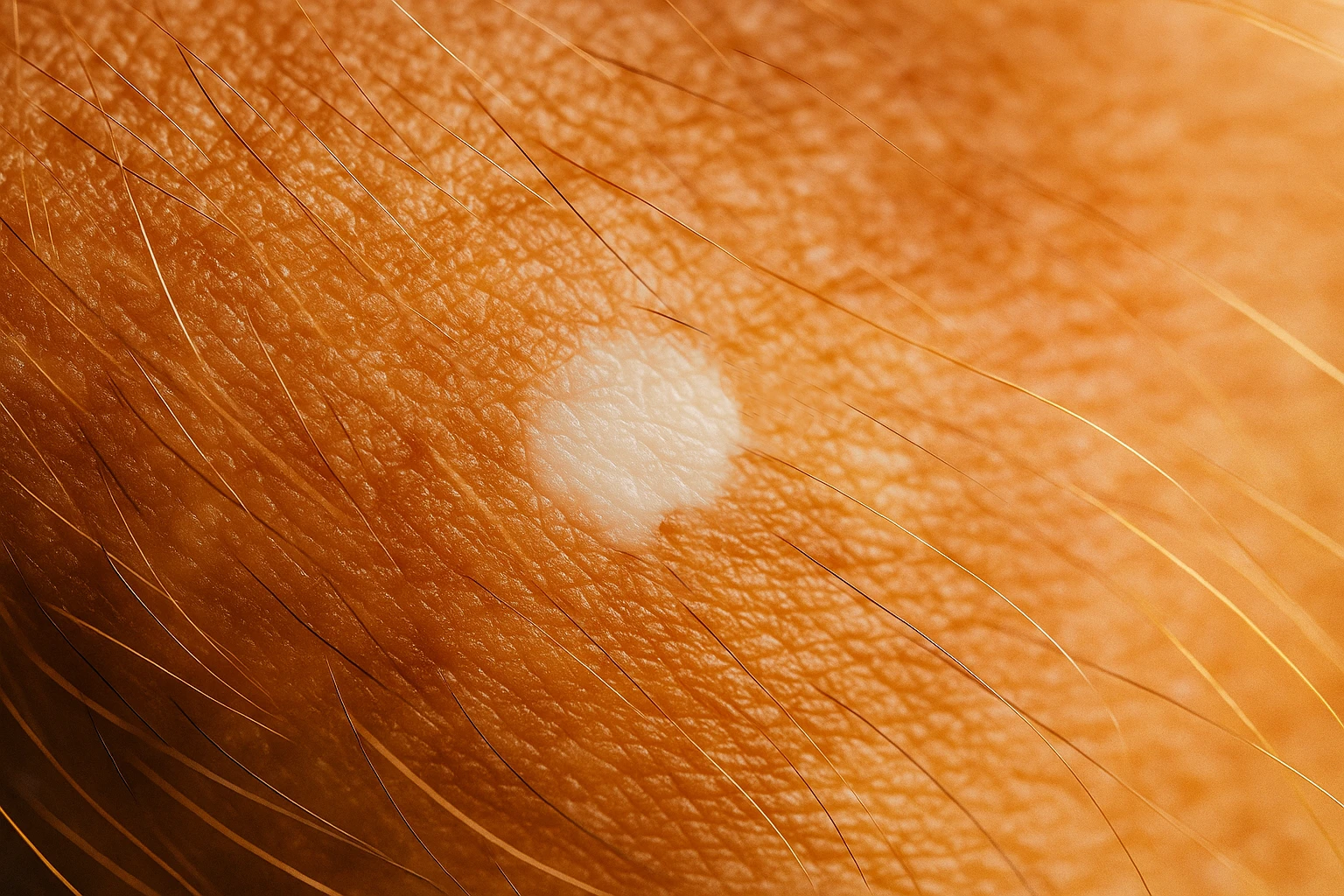
This tongue-twister is the single most common cause. It produces small, flat, porcelain-white spots, usually 2–5mm across, most often on sun-exposed areas like the shins and forearms. They become more frequent with age and cumulative sun exposure, appear more in fair-skinned people, and are completely harmless. The name literally means “unknown-cause spotty loss of pigment.”
Tinea Versicolor (A Fungal Cause)
Caused by an overgrowth of a yeast that naturally lives on the skin, this leads to small patches that are lighter (or sometimes darker) than the surrounding skin, often slightly scaly. It shows up most on the trunk, shoulders and upper arms and tends to be more noticeable after tanning, because the affected areas don’t darken with the rest of the skin. It’s easily treated with antifungal creams or washes.
Pityriasis Alba
Common in children and teenagers, especially those with eczema or dry skin, this appears as pale, slightly dry, faintly scaly patches — often on the face, upper arms and shoulders. It’s mild and usually fades on its own over months to a couple of years, helped by moisturising and sun protection.
Vitiligo
Vitiligo is caused by the immune system attacking the cells that make pigment. It tends to produce larger, well-defined milky-white patches rather than tiny dots, and often appears symmetrically or around the hands, wrists, eyes and mouth. It can start small, so spreading or growing white areas are worth having assessed.
Post-Inflammatory Hypopigmentation
After a bout of eczema, a rash, a burn, a scrape or another skin irritation, the healed area can be left lighter than the surrounding skin for a while. This usually evens out over time as normal pigment returns.
Bumps Rather Than Flat Spots
Not every white mark is a flat spot. Milia are tiny, firm white cysts that sit slightly raised on the skin. Keratosis pilaris (“chicken skin”) causes small rough bumps, commonly on the upper arms and thighs. Both are harmless — if what you’re seeing is raised and bumpy rather than flat, these are more likely.
When to See a Doctor
Most white spots need no treatment, but it’s sensible to see a GP or dermatologist if the spots are spreading or growing, changing colour, shape or texture, itchy, scaly or inflamed, or if you’re simply unsure what they are. A doctor can often diagnose the cause just by looking, sometimes using a special ultraviolet (Wood’s) lamp, and occasionally a small skin sample.
How They’re Usually Treated
- Harmless age/sun spots: no treatment needed; daily sunscreen helps prevent new ones
- Fungal (tinea versicolor): antifungal creams, shampoos or, if widespread, prescribed tablets
- Pityriasis alba: moisturisers, gentle skincare and sun protection
- Vitiligo: managed by a dermatologist with creams, light therapy or other options
- General: protecting skin from sun makes existing spots less obvious and limits new ones