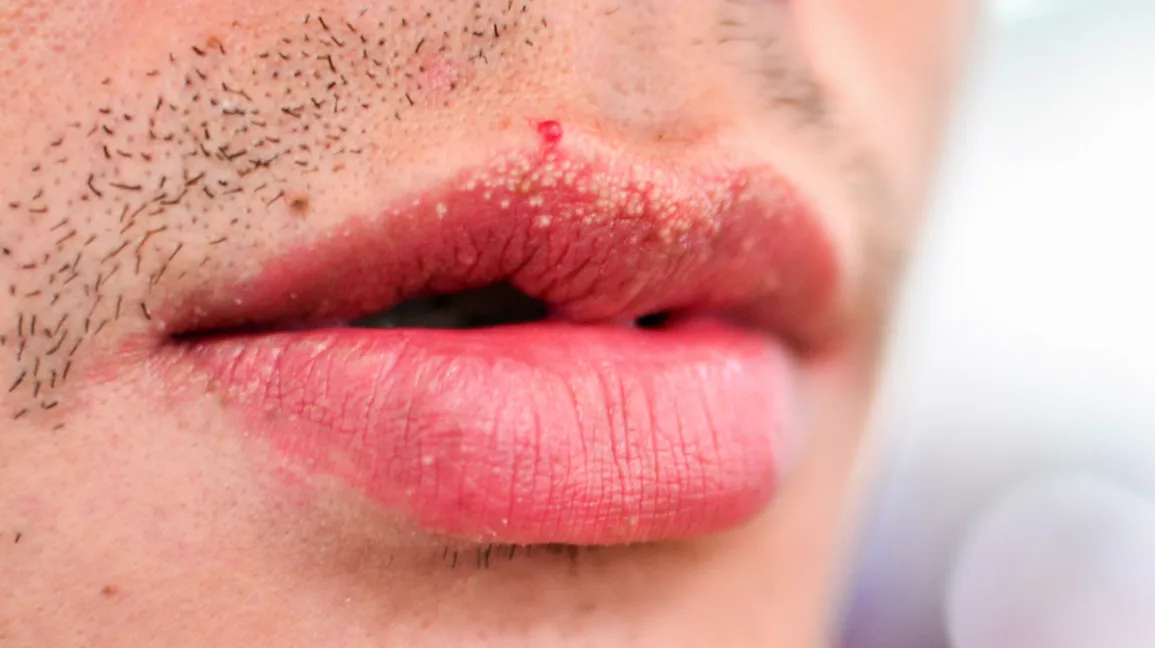
Small white bumps in these areas cause a lot of quiet anxiety — but many are completely normal anatomy. Here’s how to tell the harmless from the ones worth checking.
First, Don’t Panic
Noticing small white or pale bumps on the lips, or around the genitals, sends many people straight into worry. It’s worth knowing upfront that several of the most common causes are entirely normal, harmless features of human anatomy that a large proportion of adults have — they’re simply not talked about, so people assume something is wrong.
That said, a few causes are infections that benefit from treatment, and some are sexually transmitted. Since several of these look similar to the untrained eye, the sensible approach is to understand the possibilities and then get an actual diagnosis rather than guessing.
Harmless Causes (Very Common)
Fordyce Spots
These are the single most common explanation. Fordyce spots are small, pale yellow or whitish bumps, usually 1–3mm across, that appear on the border of the lips, inside the cheeks, or on the shaft of the penis, scrotum, or labia. They’re simply sebaceous (oil) glands sitting closer to the surface than usual — not an infection, not contagious, and not a sign of poor hygiene. Most adults have them to some degree, and they often become more visible with age. No treatment is needed.
Pearly Penile Papules
These appear as a neat row (or two) of small, dome-shaped, skin-coloured or white bumps around the rim of the head of the penis. They’re a normal anatomical variant found in a significant share of men, entirely harmless, not an STI, and not transmissible. They often become less noticeable over time.
Vestibular Papillae
The female equivalent — small, soft, symmetrical, finger-like or bump-shaped projections along the inner labia. They’re normal tissue, present from puberty, and frequently mistaken for genital warts. The key difference is that they’re symmetrical, soft, and uniform, whereas warts tend to be irregular and clustered.
Milia
Tiny, firm, pearly-white cysts just under the skin surface, caused by trapped keratin. Common on the face and around the lip border, they’re harmless and often clear on their own.
Blocked Follicles and Ingrown Hairs
Shaving, waxing, and friction from tight clothing commonly cause folliculitis — small white-headed spots around hair follicles — or ingrown hairs in the pubic area. These usually settle on their own within days.
Causes That Need Medical Attention
Genital Warts (HPV)
Caused by certain strains of human papillomavirus, these are flesh-coloured or whitish growths that can be flat or have a rough, cauliflower-like surface. They tend to appear in irregular clusters rather than neat rows. HPV is very common and sexually transmitted, and warts are treatable — but they need proper diagnosis. Vaccination protects against the strains responsible for most warts and cervical cancer.
Herpes Simplex (Cold Sores and Genital Herpes)
Herpes typically causes small fluid-filled blisters rather than firm bumps, often preceded by tingling, itching, or burning. The blisters break, form shallow sores, and crust over. They can be painful, and outbreaks may recur. Antiviral treatment shortens and reduces outbreaks, so getting diagnosed is worthwhile.
Molluscum Contagiosum
A viral skin infection producing small, firm, dome-shaped bumps with a characteristic tiny dimple in the centre. It spreads by skin-to-skin contact, including sexual contact in adults. It often resolves on its own but can be treated to speed clearance and limit spread.
Syphilis
Early syphilis classically causes a single, firm, painless sore — which is precisely why it’s easily missed and often ignored. Because it’s painless and heals on its own, people assume it was nothing while the infection progresses. Any new painless genital sore should be tested. Syphilis is fully curable with antibiotics when caught early.
Blocked Glands and Cysts
Bartholin’s gland cysts in women, or sebaceous cysts in either sex, can produce a noticeable lump. Most are harmless, but a cyst that becomes red, swollen, and painful may be infected and needs treatment.
When to See a Doctor
- The bumps are new, spreading, or changing in appearance
- They’re painful, itchy, bleeding, or ulcerated
- They appeared after a new sexual partner or unprotected sex
- There’s discharge, burning on urination, or fever
- They don’t clear within a couple of weeks
- You’re simply unsure — which is reason enough
A GP or sexual health clinic can usually diagnose these on sight, sometimes with a swab or blood test. Sexual health clinics see this exact concern constantly, are confidential, and are often free — there’s genuinely nothing to be embarrassed about.
What Not to Do
This part matters. Don’t squeeze, pick, scratch, or attempt to pop these bumps — it risks scarring, secondary infection, and, with infectious causes, spreading them further. Avoid home “removal” remedies for Fordyce spots or pearly papules; they’re normal tissue, and attempts to burn them off with acids, toothpaste, or essential oils cause real damage to very delicate skin. Never use over-the-counter wart treatments meant for hands or feet on genital or lip skin — they’re far too harsh for these areas. And avoid sexual contact until you know what you’re dealing with, if an infection is possible.