A snake’s sense of smell is its greatest strength — and, as it turns out, its biggest weakness too. Here’s how to use that against them.
Why Smell Is a Snake’s Weak Spot
Spot a snake near your home and two questions come immediately to mind: is it dangerous, and how do I make sure it doesn’t come back? The second question has a surprisingly workable answer, because snakes navigate the world almost entirely through scent.
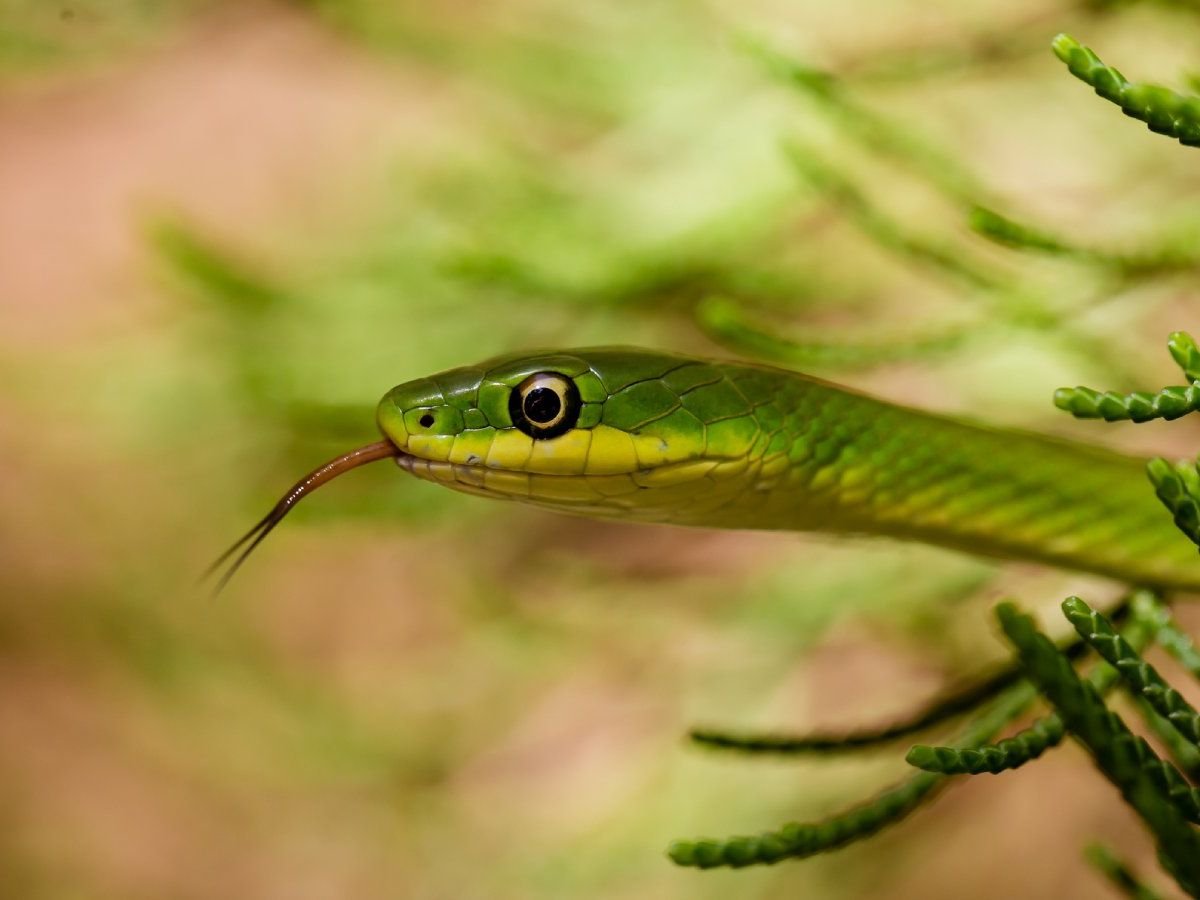
Rather than smelling the air the way we do, snakes rely on a specialised structure called the Jacobson’s organ. A snake flicks its tongue to collect airborne particles, then touches that tongue to the organ to “read” them — building a constant chemical picture of prey, danger, and territory nearby. When a strong, unfamiliar scent floods that system, it doesn’t just annoy the snake. It temporarily scrambles its ability to read its surroundings, so the snake retreats to clearer air rather than push forward half-blind. That’s the whole basis for scent-based repellents — and here are eight that genuinely put that principle to work.
The 8 Scents That Work
1. Cinnamon Oil
Cinnamon oil has the strongest research behind it on this list. Testing by USDA Wildlife Services — including field work targeting invasive brown tree snakes in Guam — has identified cinnamon oil, clove oil, and their shared compound eugenol as genuinely effective snake repellents, with snakes retreating when directly exposed. The active ingredient is cinnamaldehyde, the compound responsible for cinnamon’s sharp smell.
To use it, mix 5–10 drops of cinnamon essential oil into a spray bottle of water, shake well, and apply along fence lines, shed entrances, and foundation gaps. Reapply every few days and always after rain, and keep it away from pets, since concentrated oils can irritate cats and dogs.
2. Clove Oil
Clove oil shares cinnamon’s active mechanism and its research backing, since both are classified by USDA APHIS as effective, low-risk repellents exempt from EPA pesticide registration. The two are frequently combined, and most commercial repellent products lean on exactly this pairing. Use it the same way as cinnamon oil in a spray, or soak cotton balls in a diluted solution and tuck them into crawl spaces or garage corners. Diffusing it indoors works well for enclosed spaces like basements or sheds.
3. Garlic
Garlic’s repellent power comes down to allicin, the sulphurous compound released when garlic is crushed or chopped — the same compound responsible for its pungent smell. That intense sulphur scent is thought to disorient snakes enough to make them avoid the area. It’s worth being honest that garlic’s evidence is mostly anecdotal rather than rigorously tested, so treat it as a helpful addition rather than a standalone solution. Crush several cloves near entry points or blend with water for a spray, and reapply often — allicin breaks down within about 16 hours outdoors.
4. Peppermint Oil
Peppermint’s intensity makes it a widely recommended snake deterrent, and it comes with a useful side benefit: mint also repels mice, cutting off a major food source that draws snakes to a property in the first place. Apply it as a diluted spray or via soaked cotton balls, or simply plant mint directly in the garden, where it renews its scent naturally after every rainfall.
5. Vinegar
White vinegar works especially well around water features and hard surfaces, since snakes are highly sensitive to acidity and tend to avoid it. Pour it undiluted along fence lines, pool edges, pond borders, and foundation gaps — particularly useful near water sources snakes might visit to drink. It evaporates fairly fast, so reapply every few days or after rain, though it’s gentle enough on soil and plants to use safely around a vegetable garden.
6. Citrus
Lemons, oranges, and grapefruits all contain limonene, an aromatic compound that overwhelms a snake’s sense of smell at sufficient concentration. Boil citrus peels in water for 15–20 minutes, let it cool, and use the liquid as a spray around beds, porches, and entry points — or simply scatter fresh peels or rub zest onto fence posts and door frames. It fades faster than an oil-based spray, so think of it as a refresh-daily option, and rotate between lemon, orange, and lime to keep things unpredictable.
7. Lemongrass
Lemongrass owes its repellent effect to citronellal, the same natural compound used in mosquito repellents, which appears to work on snakes as well. Its advantage over the other options is that it can be planted directly around a property’s perimeter as a living, self-renewing barrier — fast-growing, drought-tolerant, and useful in the kitchen too. As a bonus, it helps keep mosquitoes down at the same time.
8. Ammonia
Ammonia is the strongest scent on this list, and it demands real caution. Its harsh fumes irritate a snake’s respiratory system enough to create an effective barrier, and rags soaked in ammonia placed near crawl spaces or under decks can help keep snakes away. However, it must never be used near pets, children, food gardens, or water sources, and should only be applied in well-ventilated, isolated areas — placed in a container with holes cut into a sealed lid, kept well out of reach. Unlike mothballs (whose naphthalene is toxic and of debated effectiveness), ammonia at least breaks down over time rather than accumulating in soil, but it still isn’t something to handle casually.
A Simple DIY Snake Repellent Spray
You don’t need a commercial product — a homemade spray using the two most evidence-backed oils covers most of what you need:
- 1 cup water
- 10 drops cinnamon essential oil
- 10 drops clove essential oil
- 5 drops peppermint essential oil (optional, for extra strength)
- A few drops of liquid dish soap, to help the oils blend with water
Combine the water and dish soap in a spray bottle first, then add the oils, cap, and shake well before each use. Apply around sheds, garages, and garden edges, reapplying every few days as the scent fades. For stubborn entry points, soak cotton balls or cloth strips in the mixture and tuck them into cracks or vents, where they’ll hold the scent longer than a spray alone.
It also helps to rotate your scents — switching between clove, cinnamon, cedar shavings, and other deterrents every couple of weeks — so snakes don’t get the chance to grow used to any single smell.
What Actually Solves a Snake Problem
Scents genuinely help, but they work best as one part of a bigger plan rather than a fix on their own. The strongest evidence backs cinnamon, clove, and eugenol specifically; garlic, vinegar, and peppermint have decent but less conclusive support, so treat them as useful extras.
None of it matters much if your yard is still actively inviting snakes in. Clear rock piles, woodpiles, thick mulch, and dense shrubs, keep the grass cut short, and trim brush back from your foundation — removing the hiding spots and food sources snakes are actually there for. Combine consistent scent application during warmer months with this kind of yard maintenance, and most snakes will simply move on to somewhere easier.