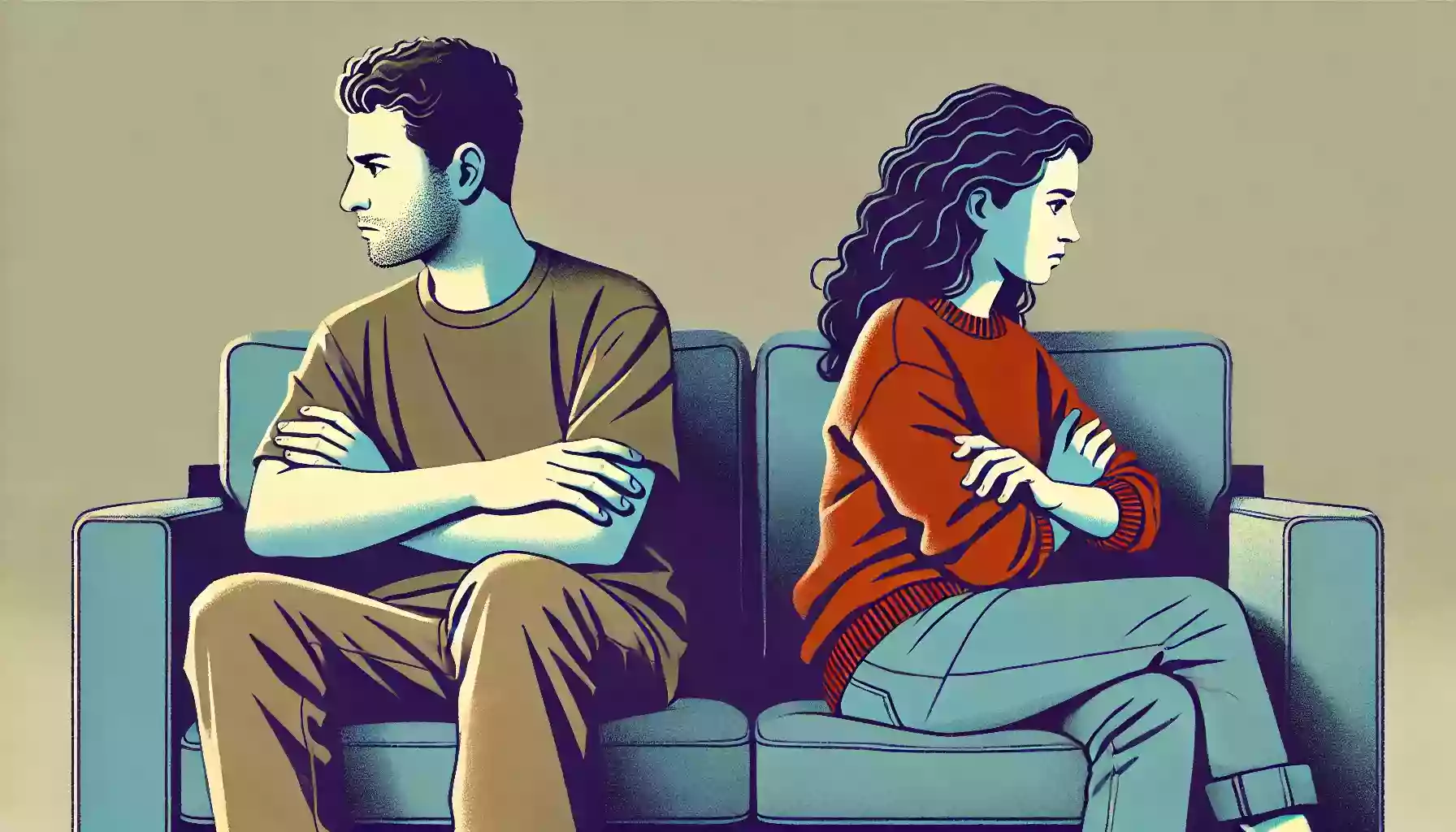
You don’t need proof to feel it. Sometimes a quiet intuition tells you something is “off” long before anything is said out loud. The trick is to stay aware without letting that awareness curdle into paranoia.
Trust Is Easy to Take for Granted
Most of us don’t think much about trust until it starts to crack. And when those cracks appear, they rarely come with evidence attached — just a gut feeling that the person beside you has somehow become absent even while they’re standing right there. That’s usually when the overthinking begins, and before long you’re spiraling.
Here’s the complicating truth: human behaviour is messy. People burn out at work. They slip into low moods. They go through private crises that have nothing to do with their partner. So the goal isn’t to become a detective the moment your partner seems distant — that instinct can wreck a relationship that was entirely worth saving. But it also isn’t to talk yourself out of what you’re noticing. Real signs do exist. The aim is awareness, not suspicion.
The 5 Signs Worth Noticing
1. The Slow Fade Into Distance
One of the most painful shifts is emotional withdrawal — sometimes called “roommate syndrome.” Conversations that were once warm and effortless shrink down to logistics: who’s paying the bill, what’s for dinner. Affection cools too; intimacy fades, and even small gestures like holding hands can start to feel strangely formal.
When you’ve been close to someone for a long time, you learn their emotional baseline, and you feel it clearly when something drifts from normal. But distance alone isn’t the alarm — withdrawal is sometimes just how an overwhelmed person copes with stress or anxiety. The real red flag is the unwillingness to close the gap. If you keep reaching for connection and are quietly turned away each time, that’s the part that matters.
2. New Routines Wrapped in Secrecy
We’ve all seen the movie version — the sudden gym obsession, the new wardrobe, the fresh scent. In real life it’s rarely that dramatic, but genuine changes in a partner’s routine are worth noticing. Someone might grow newly preoccupied with their appearance or start staying up late “working.”
On their own, none of these things mean anything. What changes the picture is secrecy. If your partner guards their phone like it holds state secrets, or can’t account for stretches of time in any way that adds up, the issue isn’t the new haircut — it’s the compartment. In a healthy relationship, people want to share their “new self” with you. When that self is being kept in a locked drawer, it’s fair to gently ask why you’re not part of it.
3. The “Walking on Eggshells” Phase
Few things drain a relationship faster than a partner who has become permanently prickly — where the way you breathe, drive, or ask a simple question suddenly becomes grounds for a fight. Sometimes this is a form of projection: someone who feels guilty or unhappy, but can’t bring themselves to leave, may pick fights so they can pin the blame on you. It’s easier to walk away from someone you’ve convinced yourself is impossible to be around.
Researchers who study couples have found that contempt and defensiveness are among the most corrosive forces a relationship can face. When two people spend their days defending themselves against each other, emotional safety disappears. There may be no third person involved at all — but the sense of being a team clearly has.
4. Privacy Versus Hiding
Everyone is entitled to privacy. You don’t own your partner’s inbox, and a healthy person keeps a part of their life that’s simply their own. But privacy and secrecy are not the same thing. “I’m texting my mum about something personal” is privacy. Quietly deleting a call history so you can never see who was on the other end is secrecy — and most people can feel the difference instinctively, even when they can’t articulate why.
The worst response here is to start snooping. The moment you begin searching drawers or tracking movements, you’ve traded trust for surveillance, and something in the relationship closes that’s very hard to reopen. If you can’t look your partner in the eye and simply ask what’s going on, that difficulty is itself telling you something.
5. When You’re No Longer the Priority
Love, in the end, is a verb — it shows up as time and effort. When you sense you’re no longer a priority in your partner’s life, something is usually wrong. Maybe they’re always too tired for you but full of energy for friends and hobbies. Maybe they’ve quietly stopped planning any kind of shared future.
Everyone is busy; life never really lets up. But there’s a real difference between busy and indifferent. Emotional neglect can hurt as much as any betrayal. When you feel like the only one still tending the flame while the other simply watches it burn down, that imbalance is worth taking seriously.
Why We Stay in the Dark
It’s easy for outsiders to say “just leave.” It’s rarely that simple. We stay for the shared history, the children, the tangled finances, and the hope that this is only a phase. Denial can feel safer than a reality that might upend everything. And yet intuition is hard to silence — we can sense when someone’s frequency has changed, even as we try not to let that awareness harden into paranoia.
How to Close the Gap
If any of this feels familiar, it’s probably time for the conversation you’ve been avoiding. The key is to lead with vulnerability rather than accusation. Something like: “I’ve felt a distance between us for a while now, and honestly it scares me. Can we sit down and talk about what’s happening?”
More often than not, the truth sits somewhere in the middle. Maybe there’s no affair, but a real unhappiness neither of you has named. Maybe your partner is craving something they can’t quite put into words. The only thing that actually moves a relationship forward is honesty — everything else just prolongs the guessing. Whether it ultimately survives or not, you deserve to live in reality rather than in a story your anxiety wrote for you. Listen to what your partner says, and pay even closer attention to what they don’t.