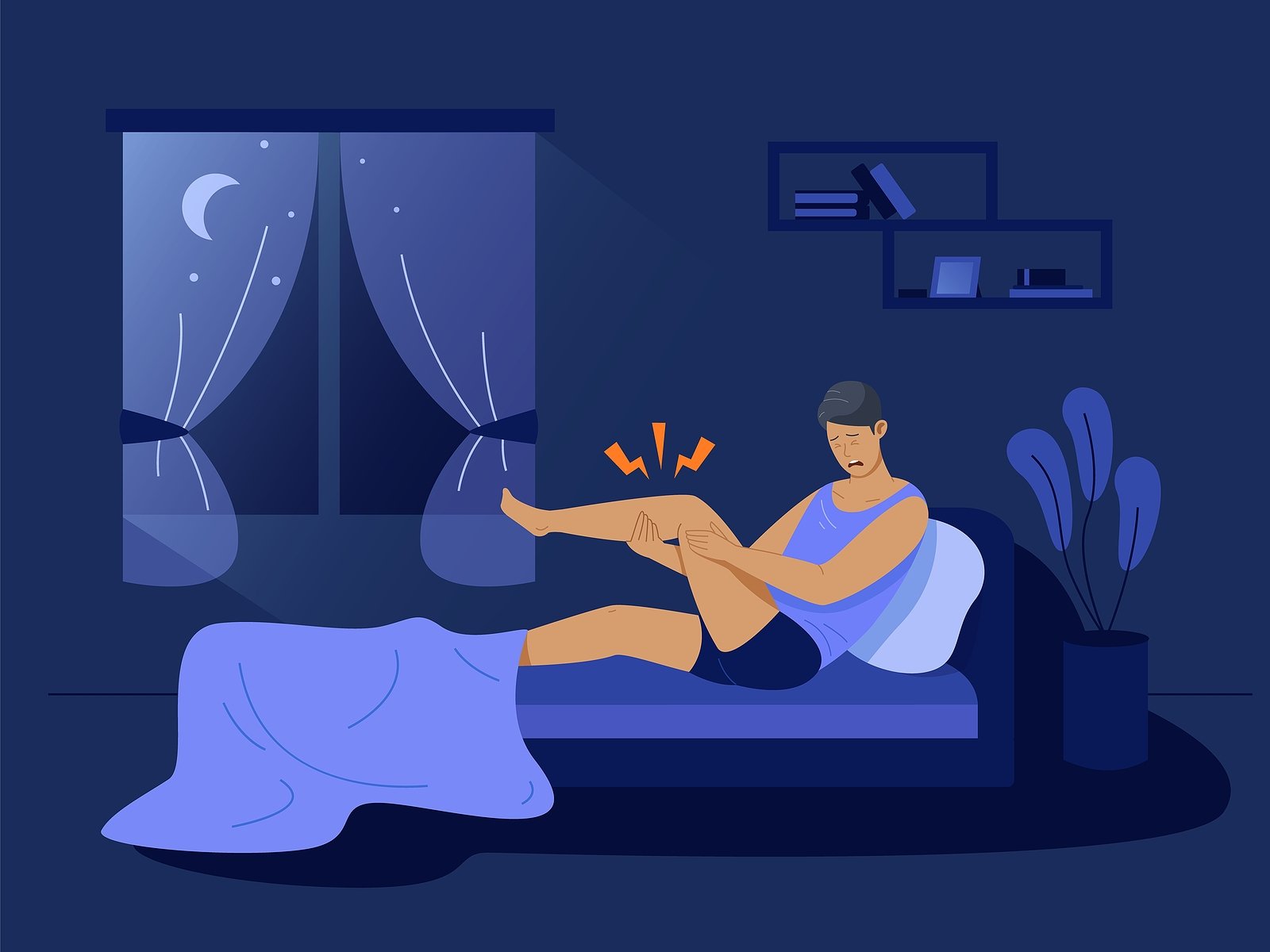
That sudden, vice-like grip in your calf at 3am is more than an annoyance — it has real causes, and most of them can be addressed with simple changes.
What Are Night Cramps?
Nocturnal leg cramps are sudden, involuntary contractions of a muscle — most often the calf, though the foot and thigh can be affected too. They typically strike during sleep or as you’re drifting off, lasting anywhere from a few seconds to several minutes. The muscle may feel rock-hard to the touch, and a lingering soreness can persist into the next day.
They become more common with age and affect a large share of adults over 50, though they can happen at any stage of life. They’re also common in pregnancy. Importantly, night cramps are not the same as restless legs syndrome, which causes an urge to move rather than a painful, seizing contraction.
The Most Common Causes
Muscle Fatigue and Overuse
This is now considered one of the leading causes. Intense exercise, long hours standing, or simply doing more than usual can leave muscles overworked and prone to misfiring at night as they try to recover.
Dehydration and Electrolyte Imbalance
Muscles rely on a careful balance of minerals — potassium, magnesium, calcium and sodium — to contract and relax properly. Not drinking enough fluid, heavy sweating, or low levels of these minerals can make cramping far more likely.
Prolonged Sitting or Awkward Sleeping Positions
Sitting for long stretches, crossing your legs, or sleeping with your feet pointed downward keeps the calf muscle in a shortened position for hours. Muscles held short are much more likely to seize up.
Poor Circulation
Reduced blood flow to the legs — sometimes linked to peripheral artery disease or varicose veins — can deprive muscles of oxygen and contribute to cramping, particularly in older adults.
Medications
Certain drugs are known to trigger cramps as a side effect, including some diuretics (“water pills”), statins, blood pressure medications, and asthma treatments. If your cramps started after a new prescription, mention it to your doctor — never stop a medication on your own.
Underlying Health Conditions
Diabetes, thyroid problems, kidney disease, nerve compression in the spine, and pregnancy can all make night cramps more frequent. Persistent cramping is sometimes the first clue that something else needs attention.
How to Stop a Cramp in the Moment
- Stretch the muscle: For a calf cramp, straighten your leg and pull your toes up toward your shin — this is the fastest relief for most people
- Stand and walk: Putting weight on the leg and walking gently helps the muscle release
- Massage the area: Firmly rub and knead the cramping muscle to encourage it to relax
- Apply heat: A warm towel, heating pad, or hot shower can loosen a tight muscle
- Use cold afterward: If soreness lingers once the cramp passes, a cold pack can ease it
How to Prevent Night Cramps
Stretch Before Bed
A few minutes of calf and hamstring stretching each evening is one of the most effective preventive measures. A simple calf stretch against a wall, held for 20 to 30 seconds on each leg, can make a noticeable difference over a few weeks.
Stay Hydrated
Drink water consistently through the day, and increase your intake in hot weather or after exercise. Don’t overload on fluids right before bed, or you’ll trade cramps for trips to the bathroom.
Mind Your Minerals
Eat foods rich in magnesium, potassium and calcium — leafy greens, bananas, nuts, seeds, beans, yoghurt and avocado. Most people get what they need from diet, so talk to a doctor before taking supplements.
Adjust Your Sleep Setup
Keep bed sheets loose at the foot of the bed so your feet aren’t forced into a pointed position. If you sleep on your back, a pillow under your feet can help; if you sleep on your front, letting your feet hang over the edge of the mattress keeps the calf in a more neutral position.
Move Regularly
Break up long periods of sitting, and consider light activity such as walking or a few minutes on a stationary bike before bed to keep circulation flowing and muscles conditioned.
Choose Supportive Footwear
Shoes with poor support — or flat feet and other structural issues — can strain the lower legs all day. Proper footwear or orthotic inserts can reduce cramping at night.
When to See a Doctor
Occasional night cramps are usually harmless. Make an appointment if your cramps are severe or frequent, disrupt your sleep regularly, don’t improve with the measures above, or come alongside leg swelling, redness, numbness, or muscle weakness. Also speak to a doctor if the cramps began after starting a new medication, or if you have a condition such as diabetes or kidney disease — in these cases, treating the underlying cause is what brings lasting relief.