Baba Vanga headlines keep coming back for the same reason cliffhangers work, people want the next chapter.
A year gets attached to a warning, someone claims a prediction has started “already,” and suddenly the future stops being abstract.
Even if you do not buy any of it, you still understand the pull. A prophecy story gives you a narrative you can track, and it lets you scan the news for “signs” the way people scan a trailer for spoilers.
The new 2026 talk follows that exact pattern. There is an alleged prediction tied to next year, and people are now pointing to something in the world and saying, “See, that is the start.” The details vary depending on which list you read, which outlet you saw first, and which version your feed keeps circulating.
People keep sharing these stories because they fit the mood people are already in. The details do not have to be neat or fully verified for the headline to travel, it just needs to line up with what everyone is already talking about.
And underneath all the Baba Vanga mystic branding, the hook is very human. People like the idea that events connect, that there is a sequence, that somebody saw it coming. Knowing “what happens next” has social value too. It gives you something to talk about, something to argue over, and a way to sound ahead of the curve even when nobody actually has the map.
Who Baba Vanga Was and How She Became Famous
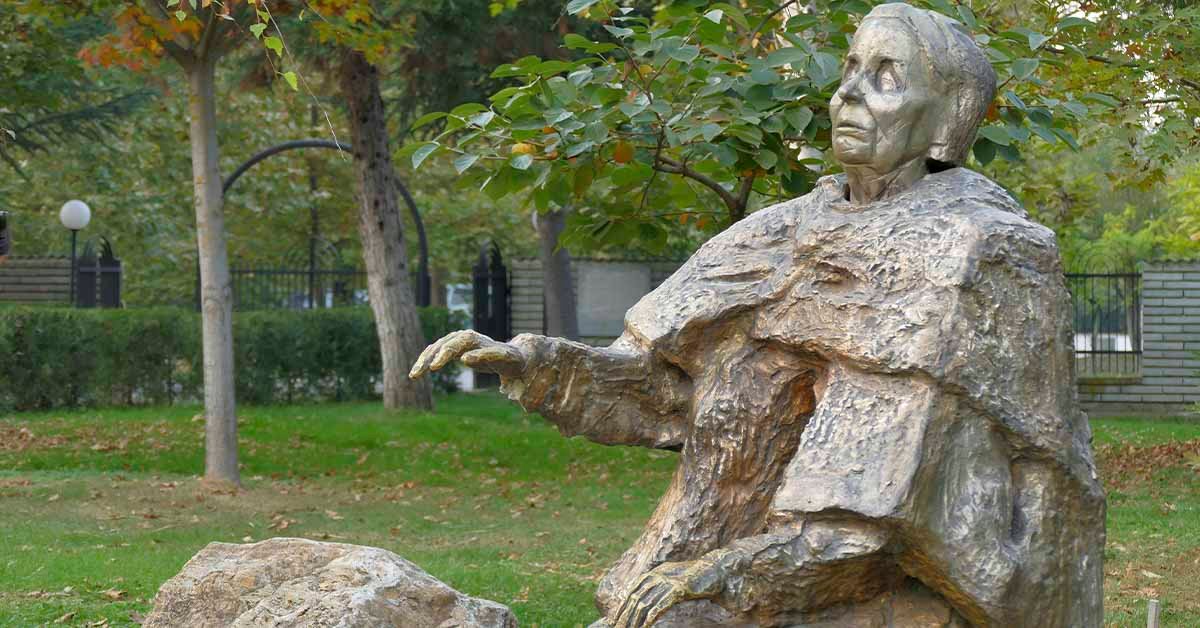
Baba Vanga was the public name of Vangeliya Pandeva Gushterova, a Bulgarian figure widely described as a mystic and healer, born in 1911 and dying in 1996.
The basics of her biography are fairly consistent across references: she lost her eyesight as a teen, she lived much of her life in Bulgaria, and she became a regional phenomenon during the Cold War era, with long lines of visitors coming to ask questions about health, family, and the future.
Her notoriety was not only folklore passed around in kitchens. Accounts describe local government involvement and a system where visits were organized and an admission fee existed, including different pricing for locals versus foreigners.
References also describe attention from Bulgarian institutions linked to the Bulgarian Academy of Sciences, which matters because it shows how her fame got managed and amplified, not only whispered about.
The prediction side is where things get complicated fast. Baba Vanga did not leave behind a universally accepted, dated, primary archive that journalists can audit like a ledger.
A lot of the famous “she predicted X” claims are built from second-hand retellings, later collections, and lists that get reshuffled year after year.
Academic work on her media afterlife describes her as a figure whose “voice” gets remixed across different formats, especially online, and that process makes attribution looser, not tighter.
Even with that caveat, a set of “hits” gets repeated constantly in popular coverage and fan circles.
She is often credited with foreseeing the 9/11 attacks, the Chernobyl disaster, Princess Diana’s death, and other major geopolitical changes.
The more cautious way to say this is: those are the events she is most often linked to by believers and by media recaps, not a list of verified statements recorded before the fact.
So why do people believe the superstitious riddles anyway? One reason is how broad language works.
If a line is symbolic enough, it can be stretched to fit many outcomes. Another reason is selection, the claims that do not match anything fade out, and the claims that can be made to match get repeated until they sound established.
And there is also the social side: prophecy talk rewards the person who can connect dots first, even if the dots were only connected after the event became obvious.
The 2026 prediction currently getting the most attention is the one framed around artificial intelligence becoming dominant in more visible ways.
You see it packaged as a warning about technology overtaking human decision-making, reshaping work, and changing daily life. Whether Baba Vanga ever said that in a verifiable way is disputed, but the reason the story is spreading now is simpler: people have a very specific example they can link to it.
That example is “Non Player Combat,” a project promoted as a fully AI-generated reality competition series. Reports say it launched on December 8, 2025 as a four-part season with six AI-made contestants, and the hook is as blunt as it sounds, they are thrown into a survival contest where they hunt each other until one remains.
The series is credited to Tom Paton, CEO of AiMation Studios, and reports say it was produced using the company’s in-house AI system, Omnigen-01.
The storyline leans into danger and spectacle, with scenes described as involving lethal wildlife, including polar bears and venomous snakes, plus direct fights between contestants, which is why so many outlets compare the tone to a mash-up of “The Hunger Games,” “Fortnite,” and “The Traitors.”
The “cast” is synthetic but still packaged like a normal reality lineup, with backstories such as a former Navy SEAL, a wilderness coach, an influencer, a Special Forces trainer, someone linked to military intelligence, and an ex-con.
Distribution has been described as online-first, with episodes released on YouTube and via AiMation’s own platform. Apparently, it is pretty low-cost to produce as well- roughly 90% cheaper than traditional productions.
One UK comparison frames it as about a tenth of the cost of major competition shows, using “The Traitors” as a reference point at roughly £1 million per episode, while The Times has also reported a season figure under £30,000. All of that makes it easy for prophecy fans to say, “This is the start,” because this is a huge turning point for AI in our little world.
Why We Keep Needing “What Happens Next,” From Nostradamus to Oracles
People follow prophecy for the same reason they binge a series, they want to know what happens next. When the future looks messy, a prediction gives you a storyline you can hold onto, even if you are only half convinced.
Psychologists have a term for this, “need for cognitive closure,” which basically means a lot of us would rather land on an answer than sit in uncertainty forever.
That helps explain why prophecy content spreads so easily. It gives your brain a stopping point, and it gives you something definite to say in a world that rarely gives definite answers.
This is not a modern internet hobby either. Plenty of societies treated prophecy as public business. The Oracle of Delphi is the famous example, where leaders consulted the Pythia on major choices, including politics and war.
People wanted a direction, and an oracle offered one, often in language that could be read more than one way. That flexibility kept the oracle relevant, because listeners could connect the message to whatever situation they were facing.
Nostradamus works in a similar way, just with printing instead of temples. He published cryptic quatrains grouped into “centuries,” and the writing style makes it easy for later readers to map his lines onto almost any major event.
That is why his name still circulates every time something big happens. The verses are vague enough that someone can always find a match, especially after the fact when the outcome is already known.
When people say Nostradamus predicted something, they usually bring up the same examples.
The Great Fire of London is one of the biggest, because interpreters connect a verse that mentions London and wording that looks like “’66” to the 1666 fire, which historians date to early September of that year.
The argument is not about whether the fire happened. The argument is whether the verse was actually specific before the fire, or whether it only reads as “accurate” once people already know what they are looking for.
That same logic applies to Baba Vanga. These stories are fun, they are easy to share, and they give people a way to talk about fear and change without getting lost in data and probabilities.
But they are a shaky foundation for decisions, because the same things that make them entertaining, broad phrasing, symbolism, and flexible interpretation, also make them hard to verify.
The more useful way to read prophecy stories is as a snapshot of what people already worry is coming, not as a dependable schedule for the future.
What Baba Vanga Said About 2026
Baba Vanga keeps popping up because her name does a lot of work fast. You hear it and you already know the setup: a warning, a year attached to it, and the idea that the world will “confirm” it later. That is why the 2026 chatter spreads so quickly.
You do not have to treat her as a reliable source to see the appeal. A prediction story gives people a simple way to talk about uncertainty, and it turns random headlines into a thread you can follow.
Baba Vanga’s 2026 predictions are usually shared as a list of themes, not exact quotes. The most repeated claims say 2026 could involve major natural disasters, escalating global conflict, and an economic downturn tied to wider instability.
Another common claim is that 2026 marks a turning point for artificial intelligence, with AI taking on a bigger role in work and decision-making than people expect. Some versions also say there could be some form of “alien contact,” sometimes pinned to November 2026.
Other claims that show up in roundups include advances in medicine, like progress toward lab-grown organs and better early cancer detection, plus a far-out space storyline that talks about humans beginning to mine Jupiter or preparing for it.
Right now, the thread people are following is AI. For years, AI has been framed as a helper, a tool that speeds up editing, generates drafts, or supports effects work.
The current conversation is sharper because AI is now being pitched as the whole package in certain projects, not just a behind-the-scenes assistant.
That is where the 2026 prediction gets tied to “Non Player Combat,” because it is not an abstract debate. It is a specific release people can look at and judge for themselves.
“Non Player Combat” has been described as a four-part AI-generated reality competition series with six AI-generated contestants.
The premise is a survival elimination format, with the “players” facing deadly scenarios and fighting until one remains. Coverage credits the project to Tom Paton and AiMation Studios, and reports say it was produced using the studio’s in-house system, Omnigen-01.
The show’s marketing leans into its synthetic cast, presenting the contestants with backstories the way traditional reality TV does, then dropping them into a violent, game-like world built for spectacle.
It has been compared to a mash-up of familiar reference points like “The Hunger Games,” “Fortnite,” and “The Traitors,” which signals the tone and pacing it is aiming for.
AI in 2026 and Beyond
If you step back from the Baba Vanga angle for a second, the bigger point is what this represents for entertainment.
A fully AI-generated series is a different move than using AI for a single task inside a normal production. It suggests a future where shows can be generated more quickly, with fewer people involved, and potentially at far lower cost.
Once a format proves it can attract attention, other companies copy it, improve it, and build a system around it. That is how trends become industries.
This is also why prophecy stories keep getting recycled. They give people a script to place on top of change. They let you say, “This is the turning point,” even when the world is complicated and outcomes are not clear.
Whether or not Baba Vanga ever delivered a clean statement about AI, the popularity of the claim says something: people sense that media is entering a new phase, and they want a way to talk about it that is not just technical jargon.
The next questions are the ones that matter. If AI entertainment keeps improving, how far does it go. When synthetic characters look more convincing, speak more naturally, and move through scenes without obvious glitches, will most viewers still be able to tell what was made by humans and what was generated.
And if the answer becomes “not easily,” what does that change beyond TV. Advertising, political content, scams, and even basic trust in video and audio all depend on the assumption that “seeing” counts for something.
If code can produce content that passes as ordinary footage, what does that lead to in entertainment, and what does it lead to at a larger scale.
Disclaimer: This article was written by the author with the assistance of AI and reviewed by an editor for accuracy and clarity.