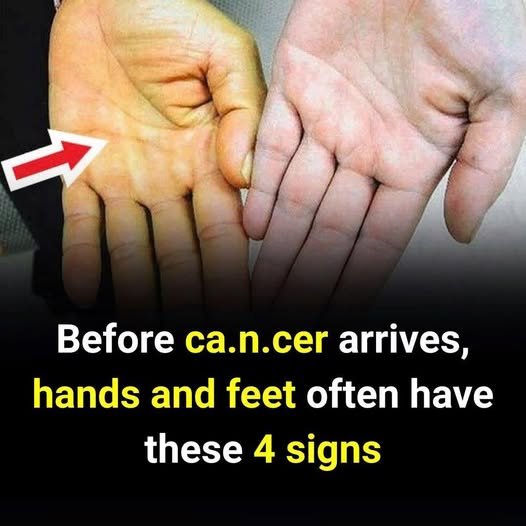
Changes in the hands and feet that may signal cancer before a diagnosis often relate to skin abnormalities, nerve issues, or physical changes in the digits. These can be caused by the cancer itself, or in some cases, are side effects of cancer treatments like chemotherapy.
Here are four warning changes that might appear in the hands and feet:
1. Unusual Skin Changes or Non-Healing Sores
The appearance of new or changing spots on the skin of the hands and feet can be a sign of skin cancer, including melanoma.
- New or changing moles/spots: The most important sign is a mole or spot that changes in asymmetry, border, color, or diameter.
- Dark streaks under nails: A brown or black vertical line under a fingernail or toenail can be a sign of acral melanoma, a rare form of skin cancer.
- Non-healing sores or scaly patches: Any sore that does not heal, or a persistent red, scaly patch, could be a sign of basal cell or squamous cell carcinoma.
- Tiny red spots (petechiae) or easy bruising: These can be symptoms of blood cancers like leukemia, which affect the body’s ability to clot blood effectively.
2. Numbness, Tingling, or Pain (Peripheral Neuropathy)
Nerve damage, known as peripheral neuropathy, can cause pain, numbness, tingling, or weakness, often starting in the hands or feet. This can be a rare early symptom of leukemia or lymphoma, caused by cancerous cells or related chemicals pressing on nerves.
3. Swelling, Lumps, or Bone Pain
Physical changes can indicate underlying issues, including cancer that affects bones or surrounding tissues.
- Unexplained bone pain or tenderness: Pain in the bones of the hands or feet that is persistent, worsens at night, and does not go away with rest or simple pain relievers can be a symptom of bone cancer.
- Lumps or swelling: Any unusual lump or swelling near a bone or joint should be examined by a doctor.
- Weakened bones/fractures: Cancer can weaken bones, making them more prone to fractures from minor injuries.
4. Changes in Finger/Toenail Shape (Clubbing)
Finger or toe clubbing involves the enlargement of the fingertips or toes, where the soft tissue beneath the nail beds increases and the nail itself becomes more curved. This can be associated with conditions involving chronically low oxygen levels, and is more common in non-small cell lung cancer.
When to See a Doctor
Many of these symptoms have far more common, less serious causes (like a fungal infection or diabetes). However, if any of these changes are persistent, unusual, or occur alongside other general symptoms like unexplained weight loss, chronic fatigue, or frequent infections, it is important to consult a healthcare provider for a proper evaluation.