The intersection of individual liberty and public safety is rarely as fraught with emotion as it is in the debate over the licensing of senior drivers. For many, the automobile is more than just a mode of transportation; it is the ultimate symbol of autonomy, a rolling testament to one’s ability to participate in the world without reliance on others. However, as 2026 begins, a tragic event in the coastal city of La Rochelle, France, has reignited a fierce global conversation regarding the physiological realities of aging and the point at which that cherished independence becomes a profound liability to the community.
The incident began as a quintessential scene of childhood joy. A group of children, vibrant and full of the boundless energy that defines youth, were enjoying a bicycle ride through the picturesque streets of La Rochelle. It was a moment of absolute innocence—until the world fractured in a matter of seconds. An 83-year-old driver, reportedly disoriented and traveling the wrong way down a designated street, struck the group with devastating force. The aftermath was a visceral tableau of chaos: mangled bicycles, the cries of injured children, and a community left in a state of shock. It was an unthinkable tragedy that instantly transformed a quiet afternoon into a catalyst for national policy reform.
This tragedy has forced a question into the public consciousness that many have long sought to avoid: At what point does the natural process of aging render a person unfit to sit behind the wheel? The debate is notoriously difficult because it pits cold, hard statistics against the lived experiences of real people—our parents, our grandparents, and our neighbors. These are individuals who may have logged fifty or sixty years of impeccable driving records, and the suggestion that they should relinquish their keys can feel like an assault on their dignity and a forced march into isolation.
Yet, the biological evidence is increasingly difficult to ignore. Aging brings about a slow but inevitable erosion of the faculties required for safe driving. Reaction times lengthen, peripheral vision narrows, and the ability to process complex, multi-sensory information in real-time begins to fray. According to data from France’s Road Safety Authority, the statistical reality is jarring: drivers over the age of 75 are now involved in as many accidents per mile driven as those in the notoriously high-risk 18-to-24 age bracket. The difference is that while young drivers often suffer from a lack of judgment or an excess of bravado, senior drivers are often betrayed by a body and mind that can no longer keep pace with the demands of modern traffic.
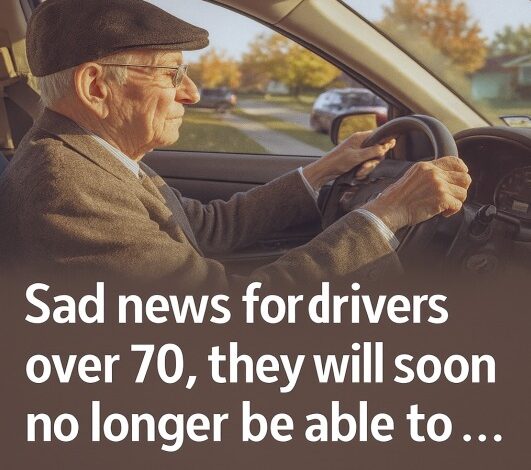
The “sad news” circulating among drivers over 70 is the looming prospect of mandatory cognitive and physical testing—or, in more extreme proposals, a hard cap on licensing ages. Across Europe and parts of North America, legislators are grappling with how to implement “fitness to drive” assessments that are both rigorous enough to protect the public and compassionate enough to respect the elderly. The challenge lies in the fact that aging is not a uniform experience. One 80-year-old may possess the reflexes and mental acuity of a person twenty years younger, while another may be struggling with the early, often invisible stages of cognitive decline.
For the families of the victims in La Rochelle, the nuances of the debate offer little comfort. Their reality is defined by the trauma of a preventable accident caused by a driver who, by all accounts, should likely not have been on the road. This event has shifted the momentum toward a more “preventative” posture in road safety. Proponents of stricter regulations argue that we already accept age-based restrictions for the young—who must undergo rigorous training and graduated licensing—so it is only logical to apply a similar logic to the other end of the age spectrum as physical capabilities inevitably wane.
However, the sociological impact of removing a license cannot be overstated. In many regions, particularly rural areas, the loss of a driver’s license is effectively a sentence of house arrest. Without the ability to drive, seniors lose access to grocery stores, medical appointments, and social circles, which can lead to a rapid decline in mental health and a sense of profound loneliness. Critics of mandatory age-based bans argue that the focus should not be on “taking away the keys,” but on “transitioning to safety.” This includes better public infrastructure, subsidized transport for seniors, and the development of autonomous vehicle technology designed specifically to assist the elderly.
As the investigation into the La Rochelle accident continues, the legal and social repercussions are already being felt. There is a growing movement calling for “medical transparency,” where physicians would be required to report significant cognitive or physical impairments to licensing authorities—a move that would move the burden of the “driving talk” from family members to medical professionals. While this protects the domestic harmony of families, it raises significant concerns regarding patient-doctor confidentiality and the potential for seniors to avoid medical care for fear of losing their mobility.
The year 2026 may be remembered as the year the “managed illusion” of senior road safety was finally addressed with legislative action. The narrative is no longer just about a tragic accident in a French port city; it is about a global society that must learn to balance the rights of the individual with the collective right to walk down a street without being struck by a driver who is no longer capable of discerning the right way from the wrong.
Ultimately, the story of the children in La Rochelle and the 83-year-old driver is a tragedy of two generations. It is a reminder that while age may indeed be a number in many aspects of life, when it comes to the physics of a two-ton vehicle moving through a crowded space, numbers—and the biological realities behind them—matter immensely. We owe it to our children to keep the streets safe, and we owe it to our elders to ensure that when the time comes to step away from the wheel, they are met with support and alternative paths, rather than just a closed door. The road ahead requires a blend of technological innovation, legislative courage, and a heavy dose of communal empathy to ensure that the “freedom of the road” does not come at the cost of innocent lives.