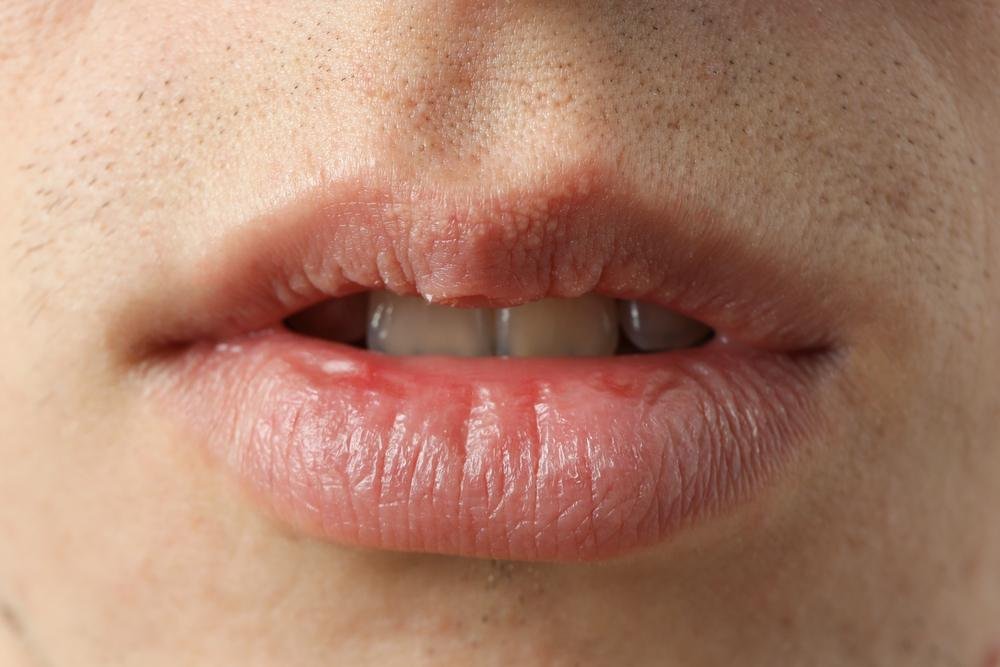
1. Fordyce Spots (Very Common & Harmless)
These are small, painless white or yellowish dots on the lips or inside the mouth.
They are simply visible sebaceous (oil) glands and are:
Not contagious
Not dangerous
Not caused by infection
They often become more noticeable with age or hormonal changes.
2. Canker Sores (Aftas)
If the white spot is painful, it may be a canker sore.
Characteristics:
White or yellow center with a red border
Pain when eating, brushing, or talking
Usually heals in 7–14 days
Triggered by stress, small injuries, acidic foods, or vitamin deficiencies
3. Oral Thrush (Yeast Overgrowth)
A fungal infection caused by Candida.
More likely if you use inhalers, recently took antibiotics, or have weakened immunity.
Symptoms include:
White patches that can be wiped off
Mild burning or soreness
Dry mouth
4. Mucoceles (Blocked Salivary Gland)
These look like translucent or whitish blisters on the inner lip.
Often caused by:
Lip biting
Trauma
Blocked salivary ducts
Usually harmless and may go away on their own.
5. Cold Sores (Herpes Simplex Virus – HSV-1)
These start as tingling or burning, then form clusters of small white or clear bumps that turn into blisters.
Highly contagious
Often triggered by stress, sunlight, or illness
Usually appear near the border of the lips
Heal in 7–10 days
6. Milia
Small, white, hard bumps caused by trapped keratin under the skin.
More common on the face but can appear on the lips
Painless
Firm to the touch
7. Allergic Reactions
Lip products, foods, toothpaste, and dental materials can trigger reactions that cause:
Small white bumps
Swelling
Itching or burning
Nickel in dental appliances is also a common trigger.
8. Oral Lichen Planus
A chronic inflammatory condition that may cause:
White lacy patches
Burning
Sensitivity to acidic or spicy foods
Needs evaluation if persistent.
9. HPV-Related Warts
Appear as small, raised, sometimes cauliflower-like white bumps.
They require a medical diagnosis and treatment.
10. Other Less Common Causes
Vitamin deficiencies (especially B12, iron, folate)
Dehydration
Autoimmune conditions
Trauma from biting or dental appliances
When to Seek Medical Advice
You should get evaluated if:
The spots last more than 2–3 weeks
They are painful, spreading, or growing
You have fever or swollen glands
The bump bleeds or becomes ulcerated
You suspect a cold sore or infection