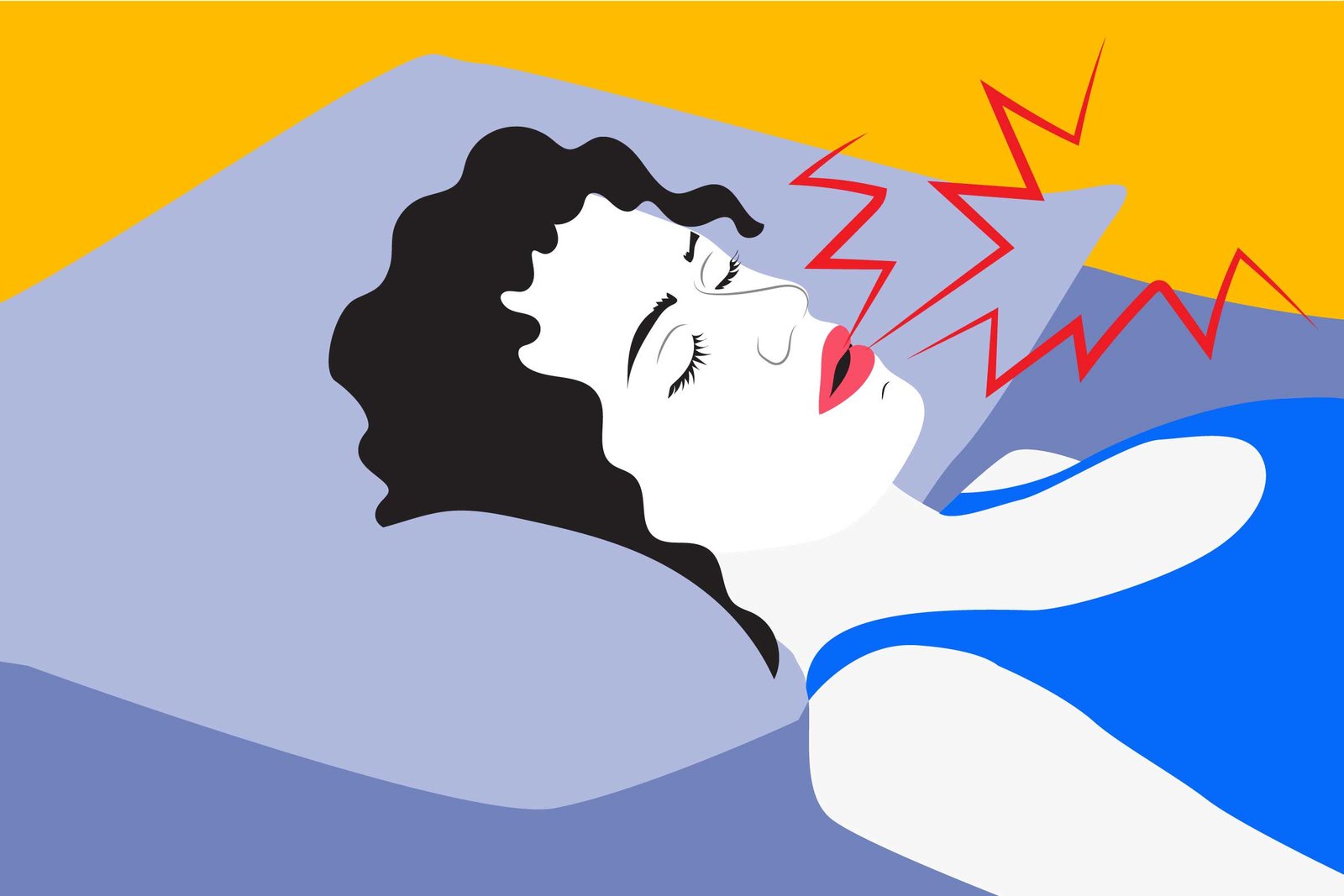
If you’ve ever woken up and realized you couldn’t move or speak, even though you were fully conscious, you’ve likely experienced a rather strange and mysterious phenomenon known as sleep paralysis.
Contrary to the common belief, sleep paralysis is actually more common than many believe. However, since it is an experience that feels surreal, many hesitate to talk about it.
My Cleveland Clinic states that sleep paralysis happens “when your body is in between stages of sleep and wakefulness. An episode is temporary and only lasts for a few seconds to a couple of minutes. It’s a type of parasomnia.”
Although an episode of this phenomenon can cause nervousness and anxiety, leaving those who experienced it scared and puzzled, it is actually harmless.
Some of this episodes are related to sleep disorders, so if they happen often, it would be best to consult a doctor and avoid the emotional stress that comes with them.

According to research, around 30 percent of people experience sleep paralysis at least once during their lifetime.
You can experience it either right before falling asleep or as you’re waking up. Some of the symptoms include: inability to move your arms and legs, inability to speak, sensations of pressure against your chest (suffocation) or moving out of your own body, hallucination, and daytime sleepiness. It can least from a few seconds to up to 20 minutes and is accompanied with feelings of fear, panic, and helplessness.
Sleep paralysis is actually the result of normal biological processes. During REM sleep, which is the stage when most dreaming occurs, our brain switches off our muscles so we don’t physically act out what we see in our dreams. A paralysis episode happens when the mind wakes up before the body does. The outcome is that you’re conscious, but your body is still “asleep.”
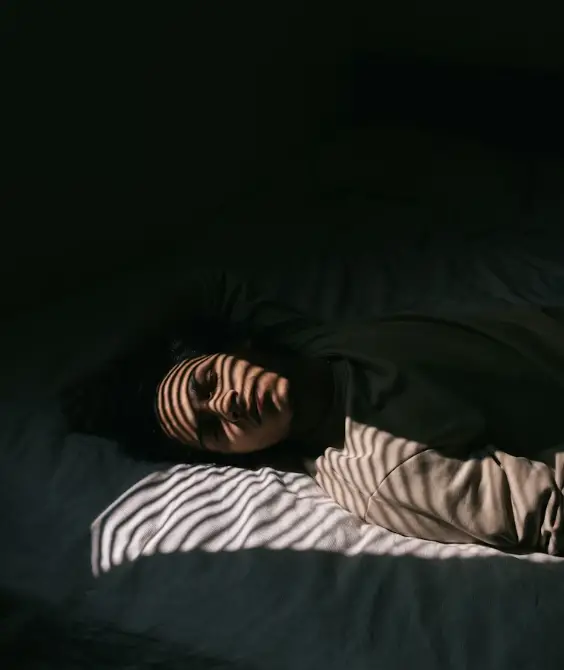
This brief mismatch is usually set off by things like high stress, poor sleep, anxiety, irregular schedules, or severe exhaustion. Essentially, anything that disrupts the rhythm and quality of your sleep can act as a trigger. Having said that, this phenomenon can also be a result of inability to adjust between time zones when you are traveling to another country away from from your home, and even sleeping on your back.
In order to avoid it from happening, try getting regular sleep, avoid screen time right before going to bed, try to manage your stress, and create a quiet and comfortable sleeping environment.
In case it still happens, focus on your breathing and try to move just one finger or toe. Bit by bit, your body will loosen up and movement will return.
The thing about sleep paralysis is that it is one of those experiences where biology and belief collide in a powerful way.
Across cultures and centuries, people rarely thought of sleep paralysis as of a neutral bodily glitch. Instead, people tried to interpret it through the system of beliefs they already relied on to make sense of danger, mystery, and things they couldn’t see or explain.
Before modern sleep science became available, this experience was just too intense to be written off as imagination. People would wake up fully aware but frozen in place, struggling to breathe, and feeling like someone or something was present in the room with them. It was then that they turned to their system of beliefs.

In medieval Europe, superstition and religion were simply a huge part of daily life, and this particular phenomenon became wrapped into tales of witches and demons. The feeling of being held down at night and unable to scream was taken as evidence that evil entities were visiting the person during sleep. Stories of the “night hag”—a dark, witch‑like figure that sat on people’s chests as they slept—were common in England, Scandinavia, and other regions of Europe.
Church documents and folklore narratives describe the night hag coming in the night, pressing down her prey with an unseen weight and blowing fear into their ear.
People didn’t think, “Oh, maybe this is my nervous system misfiring.” They thought something truly supernatural had entered their bedroom without warning and that it was there to cause them harm. The night hag wasn’t just a metaphor but a real creature in the shared imagination of the time, a being that explained why good, ordinary people could wake up feeling hunted and powerless.

Travel a little farther south and east, and you see similar experiences told in entirely different terms and it wasn’t because the core experience changed, but because the interpretive lens was shaped by different cultural beliefs.
In the Middle East, where the lines of science were blurred with Islamic cultural tradition and ancient mythology, sleep paralysis was most often blamed on jinn. The jinn are believed to be invisible creatures, made of “smokeless fire” that live parallel to humans, but in the spiritual domain. They can be mischievous, malevolent, or benign according to their species and mood. As averse to jinn as his faith was, the jinn were understood as spirits, and to be roused at night and confronted by a spirit that had taken leave of its senses or was moving between corporeal and incorporeal states was a common experience. This explanation was perfectly reasonable in that cultural context, for people were already convinced that spirits could secretly affect everyday life. For these people living in these times, this was simply a rational explanation.

In Japan, sleep paralysis has long been known as kanashibari, which literally means “to be bound” or “tied up.” People who experienced it would wake up completely aware but unable to move, often feeling a heavy presence pressing down on them. In traditional Japanese belief, this was seen as the work of restless or angry spirits attaching themselves to a person’s body while they slept. It was not just a strange quirk of the body; but a sign that a spirit was there and wanted to cause illness.
These interpretations grew out of a worldview where spirits, ancestors, and the balance between the living and the dead were deeply important. Many stories tie kanashibari to unresolved grudges, skipped rituals, or spiritual imbalances, turning what might otherwise be a confusing or frightening experience into one with clear moral and emotional meaning. People did not just feel trapped in their own bodies, also they felt caught in a spiritual web that demanded attention and respect.
In some rural parts of Italy, especially in Abruzzo, people explained sleep paralysis using the figure of the pandafeche. This creature was said to have a scary face, claws, or other frightening features, and it was believed to sit on a person’s chest at night, especially if they had upset a witch or broken a local rule. The stories are different from village to village, but the idea is the same. People didn’t see the paralysis as random or just in the mind. They believed something real and scary was causing it. Even today, some Italians will joke about the pandafeche when someone feels “held down” while half-asleep, and the story is still passed down as part of local tradition.

It’s somewhat astonishing when you consider what sleep paralysis looks like at different points in history and geography. The phenomenon itself hardly varies. People wake up in the middle of the night fully conscious they are awake, but they can’t move. They have a pressure on their chest as if something is lying on it. They feel a presence in the room. Sometimes they even hear or see things that are, to all appearances, completely real. You just turn on the part of the same whether you’re in Europe hundreds of years ago or living in a modern city today, and you’re fine. What differs is the way people describe it.
Different cultures have different narratives, different names, different significances to the experience. Beliefs don’t merely provide a post-hoc label for what is happening. They literally influence what people think they are seeing, how they think they are feeling, and what they think they are remembering later. The contemporary examples are really fascinating too. Even in cultures that we know about REM sleep and the science around it, these beliefs have not disappeared. They have only evolved. Instead of witches and demons, there are now stories of shadow people at the foot of the bed, intruders in the room, or aliens. Movies and TV and stories online give people images to put themselves in line with what they’re feeling. A teenager watching horror movies late at night might wake up and see a dark shape at the room’s corner.