It was a College Football Saturday the kind fans dream about—high stakes, roaring crowds, and a field full of athletes bigger, faster, stronger. And yet, in the midst of giants and adrenaline-fueled intensity, one story quietly captured hearts in a way few expected. It was the story of Alex McPherson, the Auburn kicker who, at 143 pounds, stood small in stature but monumental in courage.

Just fifteen months ago, Alex’s life looked very different. At 110 pounds, he wasn’t just light—he was battling ulcerative colitis, a relentless disease that attacked his colon and drained him physically and emotionally. The kicker who had once been unstoppable found himself missing almost every game in 2024. His football career, the dream he had worked tirelessly for, hung by a thread. Doctors, coaches, and teammates watched as his body battled disease, as his spirit refused to surrender. Last December, after months of pain and struggle, Alex underwent surgery that removed every inch of his large intestine. A colostomy bag would now accompany him wherever he went—a daily reminder of the trials he had endured.

Football, for Alex, was no longer just a game. It was a test of faith, resilience, and sheer determination. The path back to the field was daunting. Gaining weight, regaining strength, and rediscovering his confidence weren’t just goals—they were lifelines. Every practice, every kick, every workout was a battle against not just opponents on the field, but the echoes of illness that still lingered in his body.

The season started, and Alex faced highs and lows. There were moments of triumph, brief glimpses of the kicker he had once been. And there were moments of heartbreak, reminders that the journey back was neither linear nor easy. Last weekend’s game at Missouri exemplified that struggle. Alex missed three field goals, and for someone who had once been celebrated for his consistency, the sting was acute. Fans and critics alike took notice—none louder than Barstool Sports founder Dave Portnoy, who publicly criticized Alex after he gestured to Heaven following a missed kick. Portnoy’s tweet and podcast commentary spread quickly, questioning the sincerity of Alex’s faith and his right to celebrate despite failure.

Yet behind every public misstep was a private story few could see. After that Missouri loss, Alex did something extraordinary. He walked into Coach Freeze’s office—one of the first players to do so—and offered a heartfelt apology. “I lost that game for you,” he said. And instead of rebuke, he received belief. Coach Freeze looked him in the eye and reminded him: “I believe in you. You’re going to make the next one.” Those words, simple yet profound, became the turning point in Alex’s season.

The redemption story unfolded the very next weekend. Against Arkansas, Alex McPherson returned to the field not just as a kicker, but as a testament to perseverance and faith. With every kick, he performed flawlessly—six field goals, six for six. Each successful attempt was punctuated with a gesture toward Heaven, a humble acknowledgment of a higher power and the journey that had brought him there. It wasn’t just athletic excellence; it was spiritual testimony, resilience in motion.

Alex’s performance wasn’t just about numbers. It was about the months of physical therapy, strength training, and mental conditioning. It was about enduring the isolation of illness, the fatigue of surgeries, and the frustration of setbacks. Every kick carried the weight of his journey—his body, once frail and drained, now strong enough to execute perfectly. And all the while, his colostomy bag remained, a quiet symbol of the battles fought off the field.

When asked about Portnoy’s criticism, Alex’s response reflected the grace and maturity that had carried him through more adversity than many adults face in a lifetime. “All I’m gonna say,” he said, “is I praise the Lord whenever I miss and whenever I make. You praise Him in the highs as well as the lows. That’s what I’m going to continue to do. He’s the reason I’m back on that field.” In that single statement lay a universe of experience: faith, courage, humility, and a refusal to let criticism define him.

The story of Alex McPherson is a story about far more than football. It’s about what it means to fight when every ounce of your strength has been tested. It’s about facing a disease that threatens to take everything and finding the resilience to reclaim your life. It’s about forgiveness, both of self and others, and understanding that public scrutiny cannot diminish personal victories.

Watching Alex on the field, fans witnessed more than skill—they witnessed hope in action. In the roar of the stadium, amid the pressure of competition, Alex embodied a universal truth: greatness is not measured solely in physical feats or accolades, but in the courage to continue when everything else seems to have been stripped away. His six successful field goals weren’t just points on a scoreboard—they were statements of survival, of triumph over adversity, of unwavering faith.
And then there’s the human element often missed in viral moments—the late nights spent in rehab, the tears shed privately after setbacks, the prayers whispered when no one else was listening. Alex’s journey reminds us that behind every public victory is a private struggle, often invisible to the casual observer. It’s a reminder to celebrate effort as much as outcome, heart as much as achievement, resilience as much as talent.

In a world quick to criticize and slow to empathize, Alex’s story is a clarion call for compassion. It’s about understanding that every human has a battle unseen. It’s about learning to applaud not just the result, but the journey—the relentless commitment, the humility, and the courage it takes to get there.

In August 2021, thanks to the incredible generosity of donors, Mateusz underwent a life-saving valve surgery in the USA. This surgery opened the door for the next critical procedure, the third stage of his single-ventricle heart repair, the Fontan procedure. The journey was supposed to be one step closer to a better life, but just as we thought the worst was behind us, new complications arose. Now, we find ourselves in the same position once again, facing yet another life-altering surgery in the USA. And once again, we are asking for your help, for your support, for your belief that Mateusz still has a chance to live and grow into a happy, healthy child.
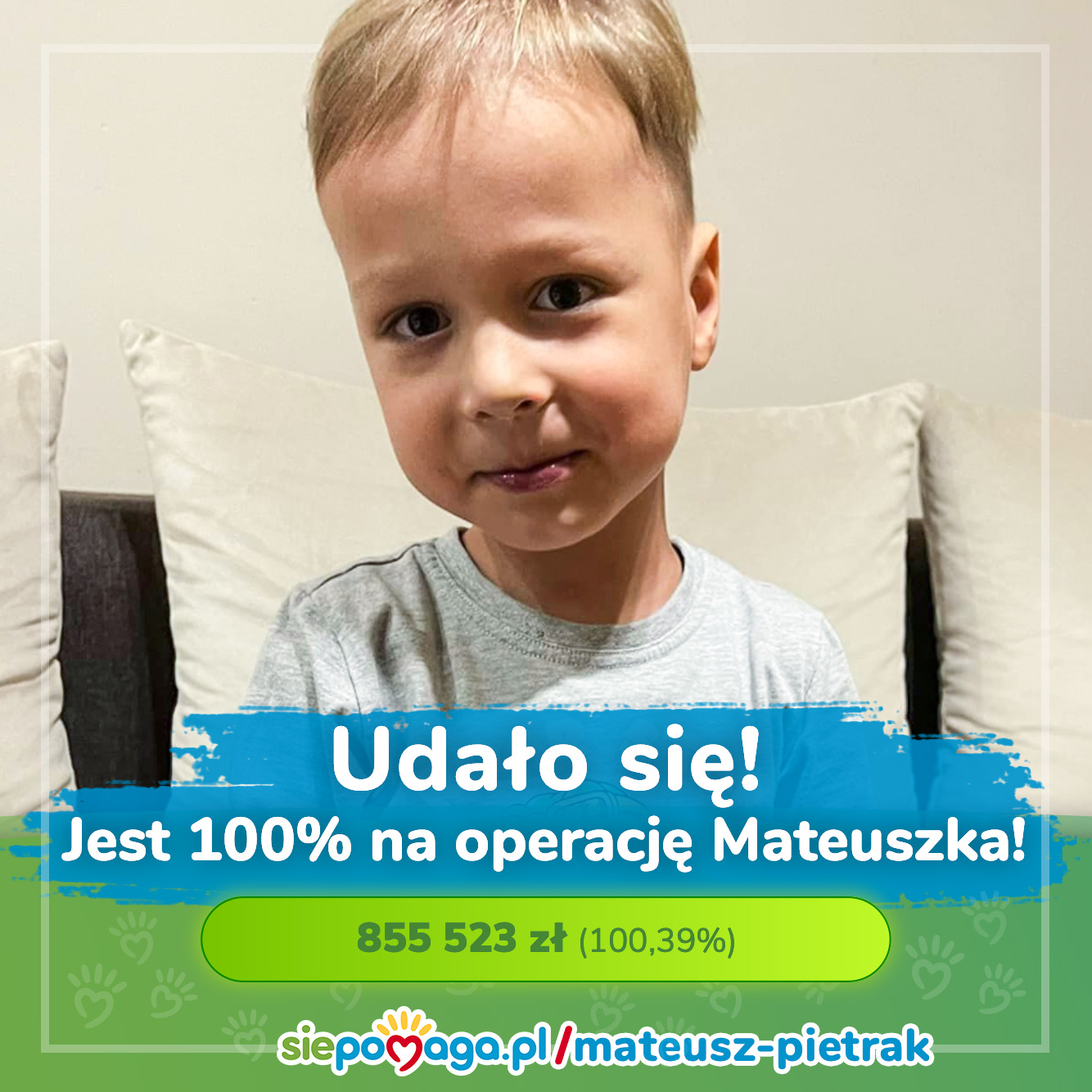
Mateusz’s story began long before he was born. I remember the moment we found out we were expecting again. It should have been a joyful time, filled with excitement and anticipation. Patrycja, his older sister, was eagerly waiting to welcome a younger brother. But that joy was short-lived. At just 13 weeks pregnant, we were faced with the devastating news that our baby had HLHS — Hypoplastic Left Heart Syndrome — a critical congenital heart defect with no cure.
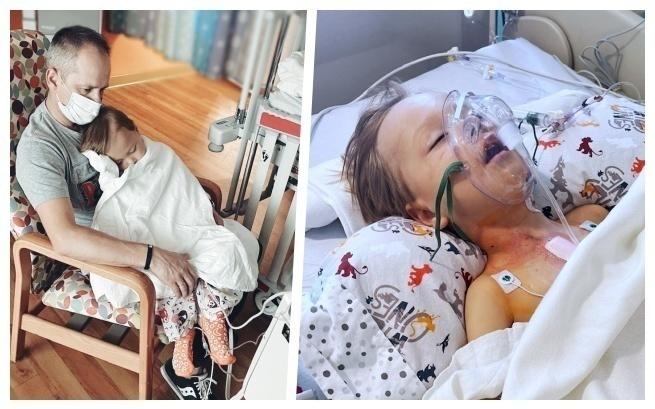
We were told that Mateusz would need three open-heart surgeries to survive. The happy anticipation of his arrival turned into weeks of fear, helplessness, and tears. But we had no choice but to brace ourselves for what lay ahead. Mateusz was born on October 3, 2017, with one of the most severe heart defects — only half of his heart works. Instead of a full, functioning heart, his tiny chest held just half of what it should have been. Along with this, he also had a severely leaky tricuspid valve.
At just two weeks old, Mateusz was already on the operating table, undergoing the first of many heart surgeries, the Norwood procedure. Though the surgery was a success, the aftermath was anything but easy. Complications followed quickly — his circulation stopped, leading to brain hypoxia and sepsis. The days in the intensive care unit and the cardiology ward stretched on endlessly. But Mateusz fought. He fought with every ounce of strength he had, and slowly, after three months, he finally got to meet his sister, Patrycja.
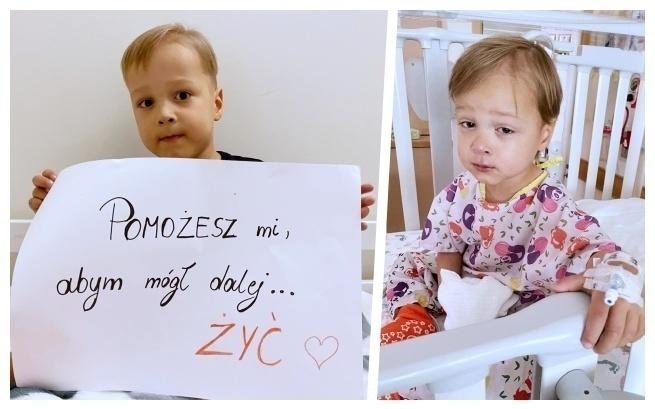
But the joy of that moment was short-lived. Two months later, Mateusz began experiencing problems again. His oxygen levels dropped, causing him to turn blue and sweat profusely. Once again, we found ourselves back in the hospital, facing more uncertainty. At six months old, Mateusz had to undergo his second life-saving surgery, the Glenn procedure. But even this wasn’t without complications, and we spent another four months in the hospital. When we finally returned home, we dared to hope that we could focus on Mateusz’s rehabilitation, that he would catch up with his peers. But another setback came soon after.
At just 19 months old, Mateusz was back in the hospital, this time due to seizures. The result of complications from the first surgery and the brain hypoxia was epilepsy. This new diagnosis added yet another layer of complexity to Mateusz’s already fragile health. Each seizure was so severe that it required a hospital stay. With epilepsy now part of his life, and with the ongoing battles he faced, we knew we needed to look beyond our borders for help.
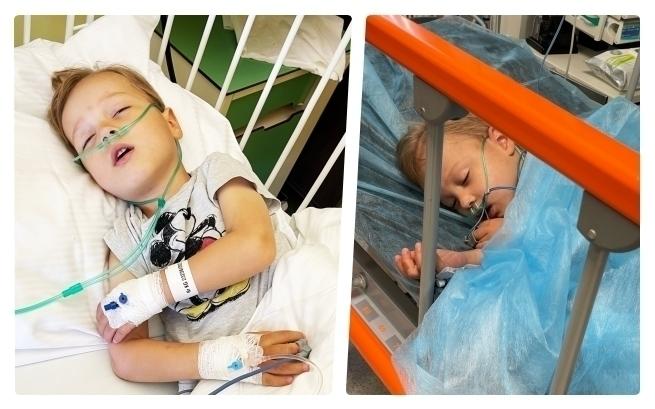
We reached out to the best specialists in Pittsburgh, where Mateusz was qualified for surgery. After consultations, the doctors decided that he needed another surgery to repair the tricuspid valve before moving forward with the Fontan procedure. That surgery was completed successfully, and we were hopeful that the next step would finally give him the chance at life he so desperately deserved.
But the path to recovery has not been easy. After returning home from Pittsburgh, Mateusz began attending kindergarten, a new chapter in his life. We were hopeful, but once again, fate intervened. In early December of the same year, Mateusz was rushed to the hospital with a fever that wouldn’t go down. The cause was later identified as COVID, which had weakened his immune system. This led to another serious condition — endocarditis, inflammation of the heart’s inner lining.
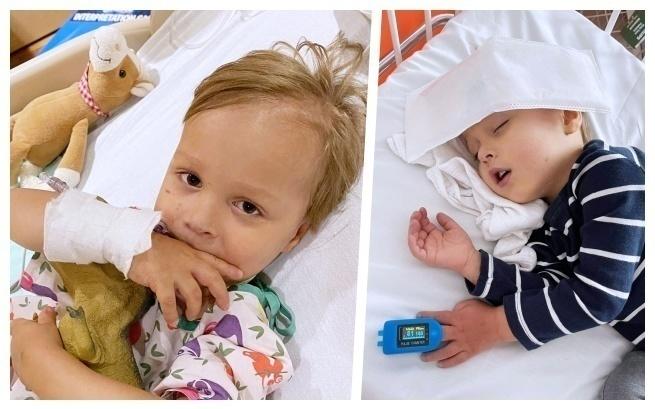
As if that weren’t enough, the infection caused a heart block, slowing Mateusz’s heart rate to dangerously low levels. He was given medication, but once again, he had to spend Christmas in the hospital. We didn’t return home until the new year.
Now, after undergoing follow-up tests, we find that his condition remains unchanged. He’s had only one seizure this year, but the increased medication dosage has caused him to struggle with his balance. He’s slowly learning to speak more, repeating words and making progress in his own time. But the question of what’s next for him still lingers. His heart is ready for the Fontan procedure, and we’ve received the qualification from the hospital in the USA. Now, we are waiting for the cost estimate, as these procedures are palliative — they are meant to prolong his life.
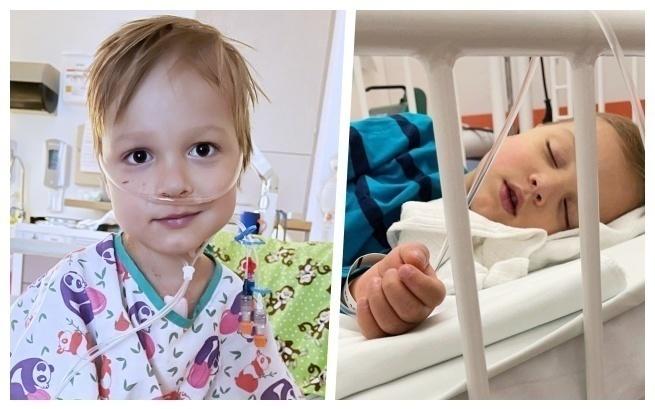
We are asking for your help once again. We want Mateusz to have the life he deserves, a life filled with childhood joy, free from the constant shadow of illness. We believe that with your help, he can get the treatment he needs and finally have the chance to live a long and happy life.
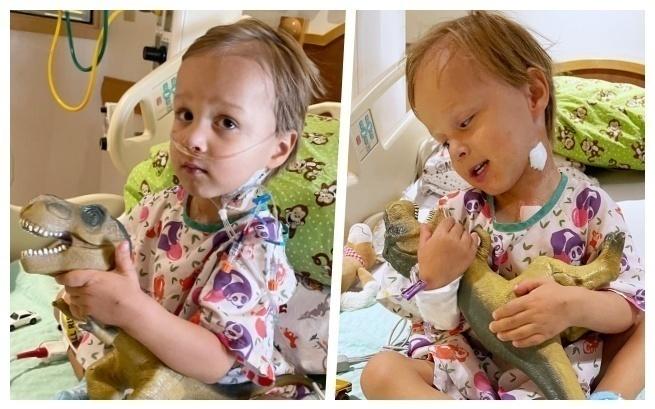
Mateusz has fought so hard, and he deserves every chance to continue his journey. Please, help us give him that chance. He is not just a child; he is a symbol of resilience, of hope, and of the unwavering love we have for him. We believe that together, we can make sure his story has a happy ending.
As the crowd cheered his perfect kicks, Alex McPherson proved that redemption is possible, that faith can sustain even in public failure, and that small bodies can carry enormous strength. And for those who follow his journey, the lesson is clear: challenges, setbacks, and criticism are inevitable. But with perseverance, belief, and faith, one can rise above it all, turning every doubt into a stepping stone toward greatness.

Yesterday, Alex didn’t just make six field goals. He made a statement—to fans, to critics, to anyone who has faced impossible odds—that resilience is the ultimate victory. He showed that even a 143-pound kicker with a colostomy bag can defy expectations, reclaim dignity, and inspire a nation.
In the end, Alex’s story is about more than football. It’s about life, struggle, and the human spirit. It’s a reminder that redemption is earned in the quiet moments of perseverance and celebrated in the public moments of triumph. It’s about pointing to Heaven, raising your eyes, and knowing that every step, every kick, every challenge endured is part of a journey worth honoring.

And as the stadium emptied, as the lights dimmed, and as social media buzzed with reactions, one truth remained: Alex McPherson had written a story that would resonate far beyond the field—a story of faith, courage, and the unbreakable heart of a young man who refused to let life’s trials define him.
“A Heartbreaking Battle: Mateusz’s Fight Against Heart Disease and Seizures”.2307
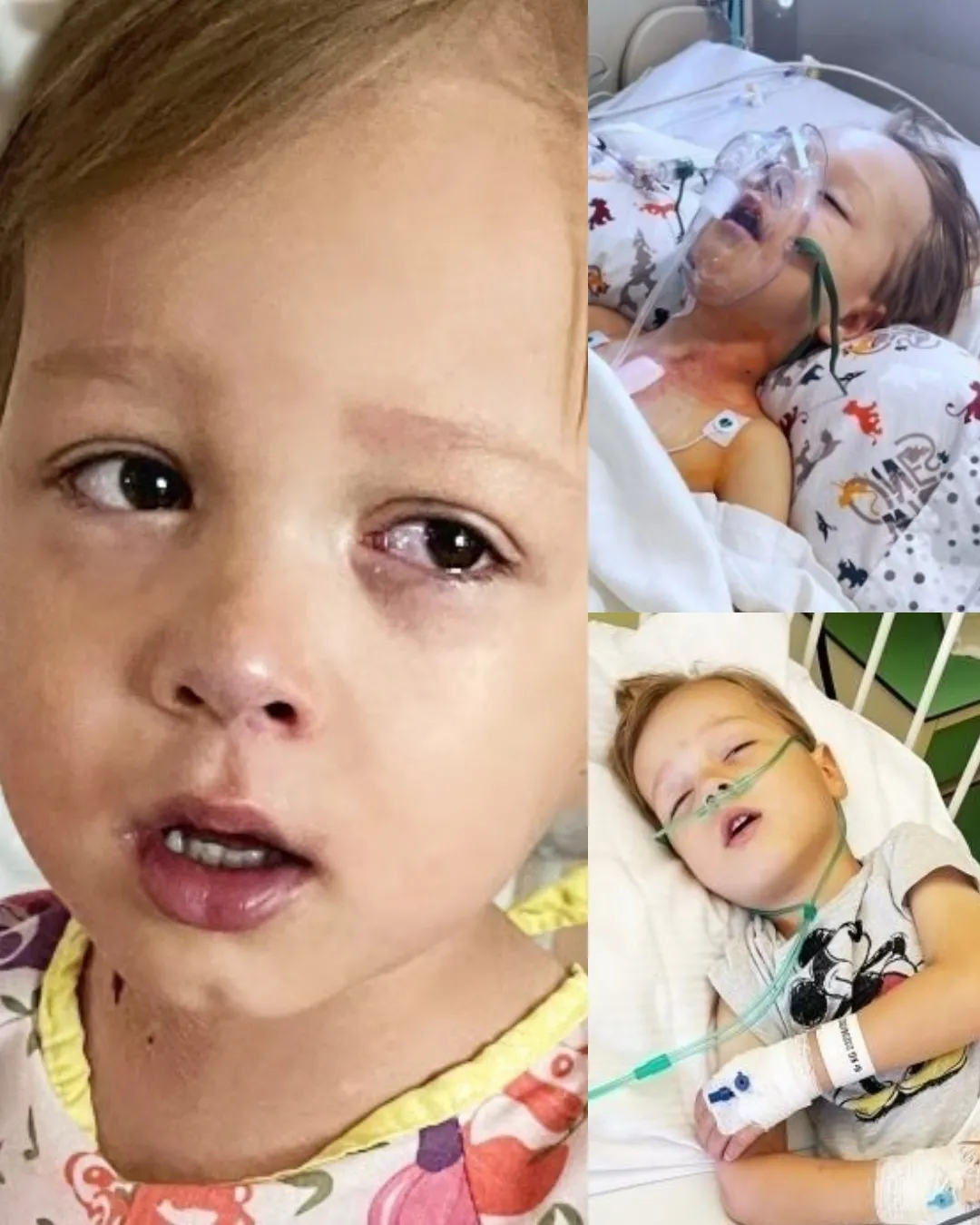
Mateusz’s Fight for Life: A Journey of Hope and Heartache
Imagine the fear that comes with a parent’s deepest nightmare: the fear of losing a child. The kind of fear that never goes away, that haunts every waking moment. It is a fear that has become our constant companion, a weight on our hearts that never lightens. This is the fear we live with every day, because our son, Mateusz, has only half of a heart. His heart, like his life, has been fragile from the start. And now, as the world grapples with the aftermath of a global pandemic, COVID has dealt another crushing blow, weakening his heart even further.