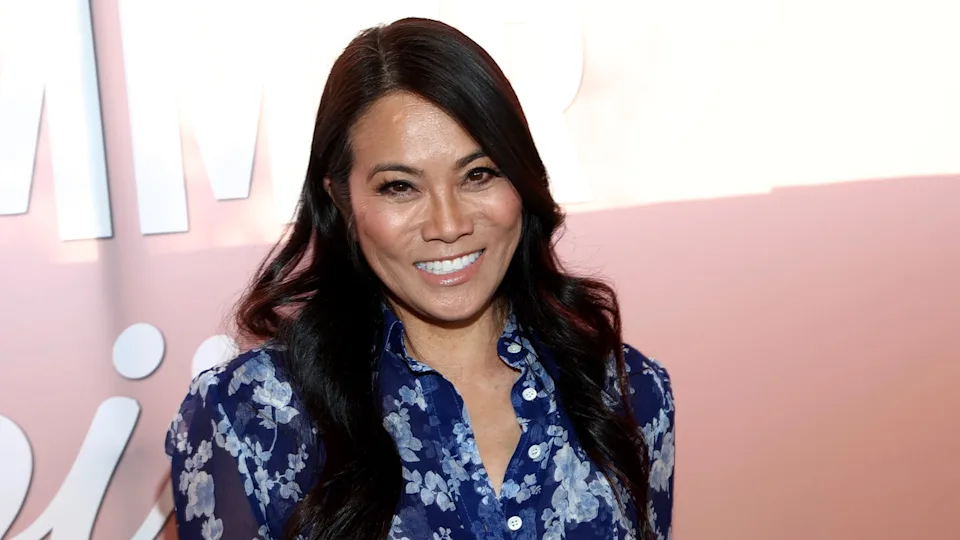
Doctor Sandra Lee, best known for her hit show Dr. Pimple Popper, was filming her series when she suffered a stroke.
The beloved doctor is now sharing her story and urging others to pay attention to warning signs that can lead to the same condition.
Dr. Lee explained that she was in the middle of seeing patients at her dermatology practice in Upland, California in November 2025 when she could sense something was off.
However, when she experienced what felt like a hot flash, she brushed it off, convincing herself it was due to menopause.
And this is exactly why it is important for women to hear her story. Going through menopause, most women experience these hot flashes, and that is the reason why Dr. Lee didn’t think she experienced anything serious at first.
“I had what I thought was a hot flash,” Dr. Lee told People in an interview. “I got super sweaty and didn’t feel like myself.”
Once the filming was over, she went to her parents’ home, and that’s when she started experiencing more symptoms.
She felt very restless and her condition began to worsen. “In one leg, I kept feeling shooting pains,” she said. “I noticed that I was having a tough time walking down the stairs.”
By the following morning, there was no doubt she experienced a stroke.
“I would hold my hand out, and it would just slowly collapse. I noticed that I had a tough time articulating and just enunciating. I thought, ‘Am I having a stroke?’” she continued.
Her father, a dermatologist as well, urged her to head to the emergency room. An MRI confirmed an ischemic stroke, which occurs when blood flow to the brain is obstructed, preventing oxygen and nutrients from reaching brain cells.
“It was just a shock. As a physician I couldn’t deny that I had slurred speech, that I was having weakness on one side, but I was like, ‘Well, this is a dream, right?”‘ she said.
“What essentially happened is I had a part of my brain that died,” she said.
The frightening episode forced her to step away from filming and focus on recovery, including physical therapy to rebuild her strength and coordination.
Although it happened nearly a year and a half ago, she says she is still deeply impacted by the effects of the stroke, something that was clear during her interview with People.
In 2019, she won the Female Star of the Year award onstage during the Critics’ Choice Real TV Awards. Today, Sandra Lee says she is very conscious of how she speaks.
“I notice it right now that I don’t speak exactly the way I used to,” she said. “You’re really embarrassed to speak because you notice it.”
Looking back, she now recognizes the risk factors that may have contributed to her stroke. “My blood pressure and my cholesterol were not under control, and I have a lot of stress in my life, dealing with my patients and the show,” she explained, adding that the experience also shifted her perspective.
“I want to think about it as a blessing in disguise. Because it reminds you to take better care of yourself.”
What we should all be aware of is that knowing the signs can help save our life or that of others.
The American Heart Association reports that stroke remains one of the leading causes of death and long-term disability in the United States.
Perhaps most concerning is the fact that women account for around 60% of all stroke-related deaths.
The reasons behind this are not simple. Experts explain that women may often experience symptoms that appear mild or easy to overlook, especially during busy daily routines. As a result, important warning signs can be missed, delaying urgent treatment when every second matters.
The Standard Warning Signs
Whether you’re a man or a woman, the classic red flags usually follow the F.A.S.T. acronym:
- Face drooping
- Arm weakness
- Speech difficulty
- Time to call 911
Other common “big” signs include sudden vision trouble or losing your balance and coordination out of nowhere.
Why It’s Different for Women
It is at this stage when the diagnosis gets more complex. While medical books always highlight the “classic” symptoms of stroke, physicians are now realizing that women tend to be exceptions and suffer from “atypical” symptoms. It goes without saying that those symptoms are not only distinct but rather quite “mild”, hence being easily overlooked and dismissed as nothing but daily stress, regular flu, or simple exhaustion.
What adds an extra level of uncertainty is the fact that patients, even health care providers such as Dr. Lee, might feel like waiting before doing anything about their condition. This problem is best explained by Dr. Pooja Khatri, a professor of neurology at the University of Cincinnati: ”Women more frequently have atypical, vague symptoms. They might start with fatigue, confusion or maybe general weakness, as opposed to weakness on one side of the body.”
These symptoms can be deceptive because, unlike something as obvious as one-sided paralysis, they don’t always appear alarming at first. There’s often nothing dramatic enough to immediately signal that something serious is happening. As a result, someone experiencing sudden mental fog or extreme fatigue might assume it’s just exhaustion and decide to “rest for a while” instead of seeking urgent medical help.
In stroke care, time is critical—often described as “time is brain”—and even small delays in treatment can lead to permanent damage.
5 Signs Every Woman Should Have on Her Radar
- Fatigue: It’s not “tired from lack of sleep” fatigue; rather, it is sudden and intense fatigue.
- Weakness: It may come in the form of typical symptoms like numbness in one arm, but it may also feel like being totally drained physically.
- Confusion or Speech Issues: Suddenly feeling confused or having difficulty forming simple thoughts and speaking.
- Unusual Pain or Numbness: Particularly if the sensations are one-sided. Severe pain should always be taken seriously.
- Dizziness or Loss of Balance: Feeling dizzy or lightheaded, or losing coordination when walking.
Having suffered from a stroke herself, Sandra Lee has been extremely open about the long process of her recovery and its emotional impact on her. Her story resonates with us because we all know people who have suffered from a stroke: our mothers, our friends, our neighbors.
The trouble is that these warning signs can be easily dismissed until they amount to everything. Sandra Lee’s message is simple: Trust your instincts. If you feel like something is not right but cannot figure out why, do not hesitate to get medical help. This is not an overreaction; it might save your life.